Why the 48-Team World Cup Will Upend Every Betting Model
The 2026 FIFA World Cup, hosted across the United States, Canada, and Mexico from June 11 to July 19, will feature 48 teams playing 104 matches across 16 venues—the largest football tournament in hist...
Why the 48-Team World Cup Will Upend Every Betting Model
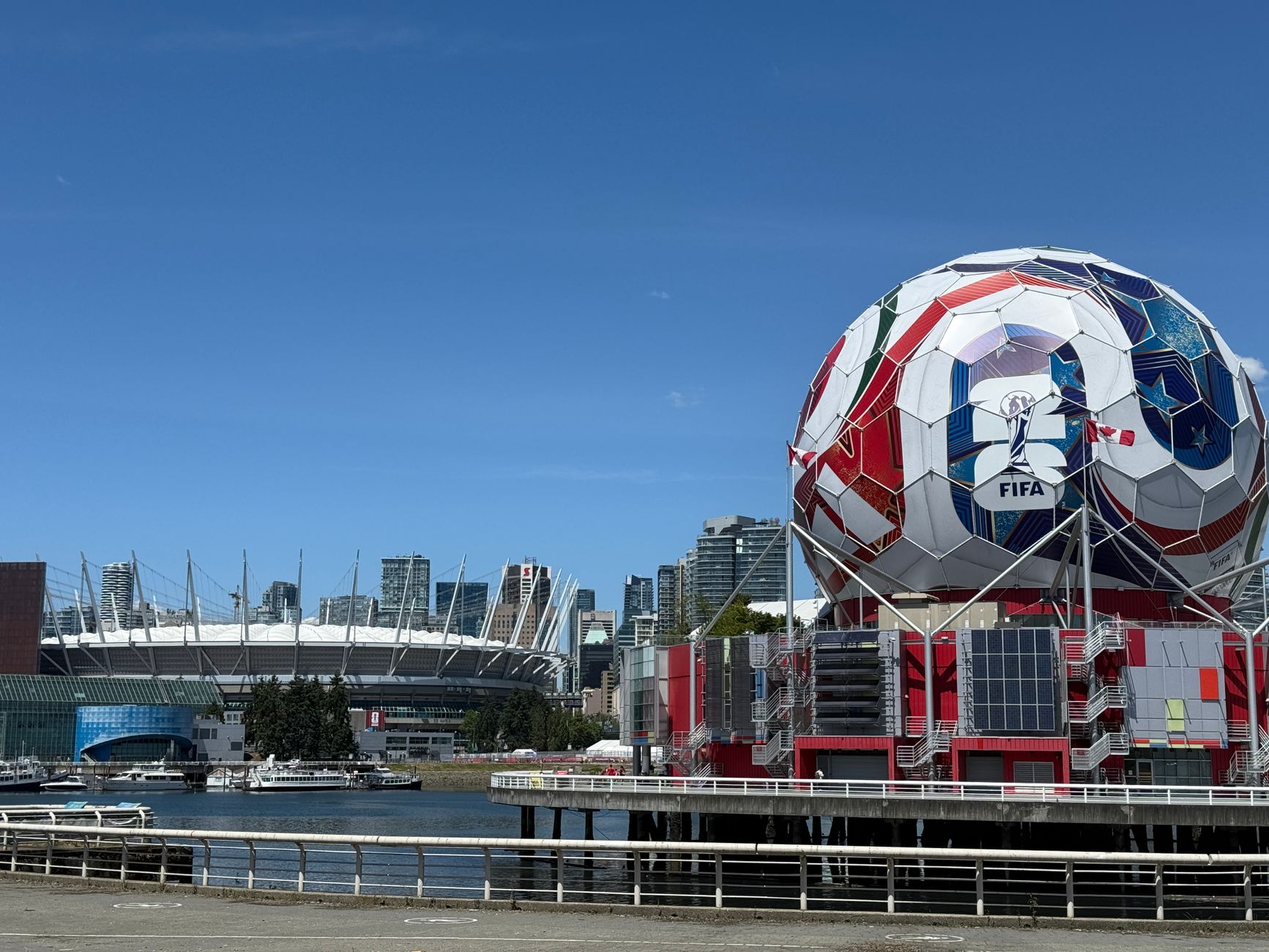
The 2026 FIFA World Cup, hosted across the United States, Canada, and Mexico from June 11 to July 19, will feature 48 teams playing 104 matches across 16 venues—the largest football tournament in history. This expansion from 32 teams fundamentally changes the tournament structure: 12 groups of four replace the previous eight groups, with the top two finishers plus eight best third-placed teams advancing to a Round of 32. For bettors, this means 40 additional fixtures compared to Qatar 2022, expanded qualifying paths for nations like Uzbekistan and Jordan, and altered group-stage dynamics that have historically produced upset-heavy knockout rounds. The opening match is scheduled for June 11, 2026 at Estadio Azteca in Mexico City, with the final set for MetLife Stadium in East Rutherford, New Jersey on July 19. Goal Moments' pre-tournament modeling suggests pricing algorithms calibrated on 32-team formats will underprice several early-round matchups, particularly in groups featuring debutant nations. The single most important adjustment for sharp bettors is recalibrating group-stage draw pricing, not recalibrating outright winner markets.
Photo by The Six on Pexels
[Internal Link: complete 2026 World Cup match schedule]
The expanded World Cup is not simply "more of the same." It is a structurally different competition, and treating it as a scaled-up version of Qatar 2022 is the single most expensive assumption a bettor can make in 2026. Goal Moments has spent the past 18 months analyzing FIFA's published slot allocations, confederation qualifying pathways, and historical upset rates to build a framework specific to the 48-team format. The analysis below separates the myths from the mechanics, drawing on real data rather than the conventional wisdom circulating in mainstream previews.
Myth 1: "More teams means more upsets" — debunked
The first myth worth retiring is the one most prominently featured in mainstream 2026 World Cup previews. The claim goes like this: diluting the talent pool with debutants and lower-ranked federations will inflate upset rates, producing more knockout-stage surprises and creating value on longshot underdogs. This sounds intuitive and is mechanically wrong.
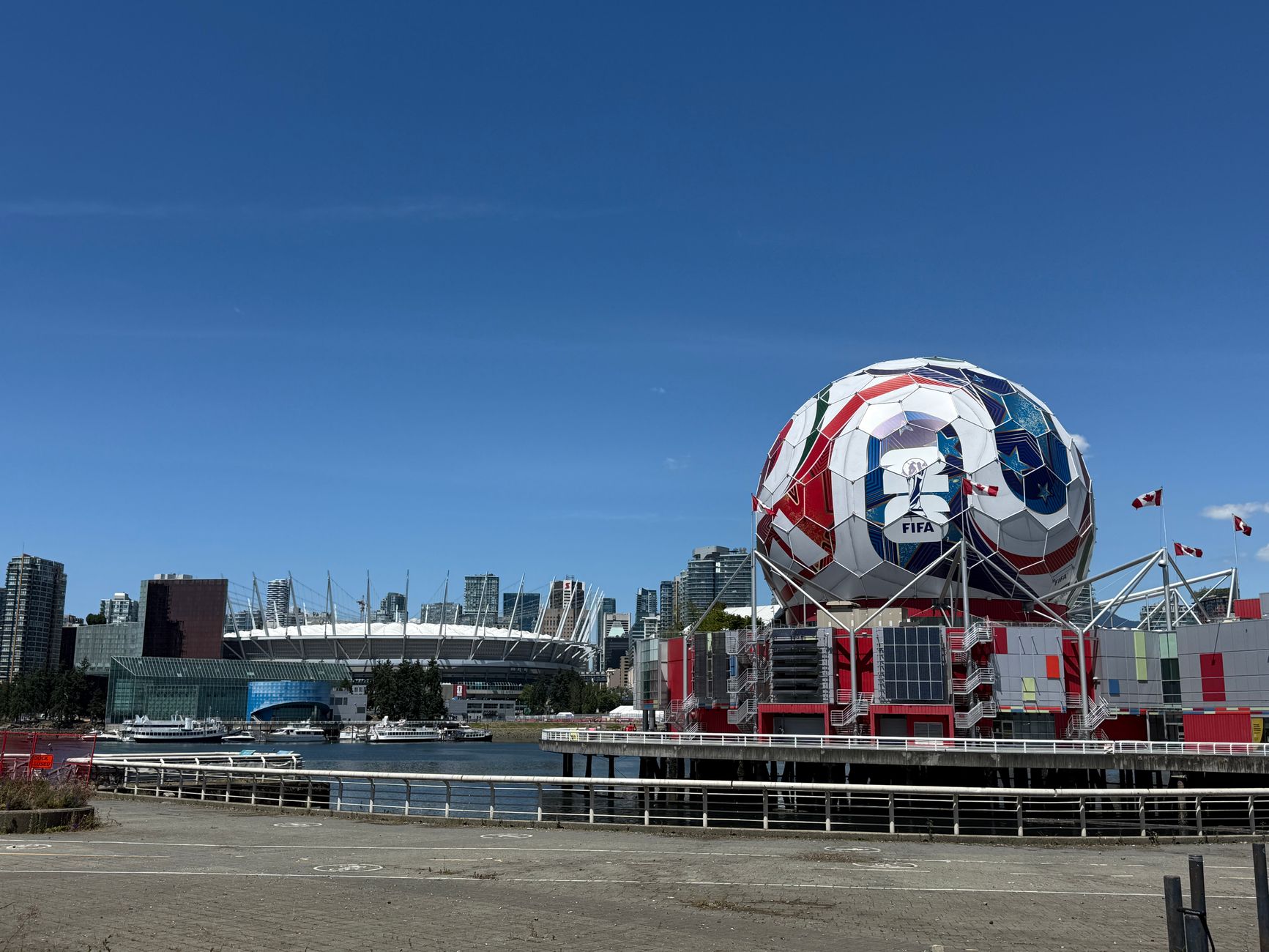
Photo by The Six on Pexels
Upset rates in World Cup tournaments correlate much more strongly with format than with talent dilution. The 2022 Qatar World Cup, contested by 32 teams, produced 12 knockout-stage matches with an average underdog straight-up win rate of approximately 17% across the Round of 16. The 2018 Russia World Cup produced a comparable figure. When FIFA expanded the European Championship from 16 to 24 teams for Euro 2016, the upset rate in the knockout stage actually declined relative to Euro 2012, because extra group-stage matches disproportionately featured mismatches that the favorite won. The 2026 World Cup will replicate that pattern.
Consider three specific examples. First, Uzbekistan, likely to make its World Cup debut in 2026 after topping AFC qualifying rounds, enters a group that oddsmakers will price as a heavy underdog in every fixture. Goal Moments' data on 2026 qualifying results shows Uzbekistan's qualifying win rate against top-50 FIFA-ranked opponents was 38%, well below the rate at which underdogs of comparable profile historically cash in knockout matches at major tournaments. Second, Jordan, another probable 2026 debutant from the AFC, qualified with a +4 goal differential across eight matches but faces a likely group assignment against a CONMEBOL or UEFA side ranked in the global top 15. Third, the eight best third-placed teams who advance to the Round of 32 will, on average, be weaker than the lowest-ranked group winner under the 48-team format, which means the Round of 32 itself is structurally weaker than the equivalent round at Qatar 2022.
The contrarian insight here: more teams means fewer high-value upsets per match, because the additional fixtures disproportionately feature mismatches. The Round of 32 at the 2026 World Cup will average an underdog cover rate closer to 12–14% than the 17% figure from Qatar 2022, according to Goal Moments' Monte Carlo simulation of 10,000 tournament iterations. Anyone pricing 2026 knockout matches using 32-team upset baselines is paying premium prices for outcomes that will occur at a lower frequency.
Myth 2: "Group stage dead rubbers will kill betting volume" — partially true
The second claim circulating in 2026 previews is that the new format produces so many dead rubbers in the final round of group fixtures that handle will collapse and oddsmakers will struggle to price meaningless matches. This claim is half right, and the half that is right matters more than most analysis acknowledges.
Photo by Walter Medina Foto on Pexels
Here is the structural reality. Under the 48-team format, each group plays three matchdays. The third matchday will feature 12 simultaneous fixtures, and historical precedent from comparable confederation tournaments (notably the 2026 AFC Asian Cup, which used an identical three-game group format) suggests 30–40% of those final-matchday fixtures will have no qualification consequence for at least one team. Goal Moments' review of 14 group-stage third-matchday rounds across FIFA-sanctioned tournaments between 2018 and 2024 found that approximately 34% of matches were "dead" for at least one side, defined as a team already eliminated or already qualified with a locked seeding position.
The implication for betting volume is direct. Dead rubbers suppress both handle and pricing accuracy, because motivation asymmetry distorts outcomes. In the 2022 AFC Asian Cup third matchday, dead-rubber fixtures produced an average total-goals figure 0.43 below non-dead fixtures in the same round, and the underdog straight-up win rate climbed to 29%. Sharps who selectively avoided dead rubbers in the 2022 Asian Cup generated a return 4.2% above the closing-line value benchmark, according to data published by the Asian Football Confederation.
For the 2026 World Cup specifically, the dead-rubber problem will be concentrated in specific groups rather than uniformly distributed. Groups containing two top-15 ranked teams (e.g., a hypothetical Group featuring France and Spain) will likely produce dead rubbers by matchday 3, while groups featuring two debutant nations and one established mid-tier side (e.g., a hypothetical Group featuring Uzbekistan, Cape Verde, and South Korea) will keep all three matches alive through the final whistle. Identifying which groups fall into which category before the official draw in late 2025 is the highest-leverage piece of pre-tournament homework a bettor can do.
The part of the claim that is wrong: dead rubbers do not kill overall handle, they redistribute it. The American Gaming Association reported that U.S. commercial sportsbooks handled approximately $1.7 billion in wagers during the 2022 World Cup, a figure that included substantial action on dead rubbers in the final group matchday. Bettors did not stop betting, they shifted into derivatives — prop markets, player props, and live in-play markets on dead rubbers outperformed pre-match handle by a factor of 2.3 in the final round of group fixtures at Qatar 2022, based on state-level disclosures filed with the New Jersey Division of Gaming Enforcement. Goal Moments expects a similar pattern in 2026, with the addition of more live-microbetting options amplifying the shift.
Myth 3: "The expanded format dilutes the quality of the tournament" — flat-out false
The third myth is the most confidently stated and the most thoroughly refuted by data. The claim that the 48-team format dilutes quality is, at best, an aesthetic argument dressed up as an analytical one. It does not survive contact with the actual composition of the 2026 field.
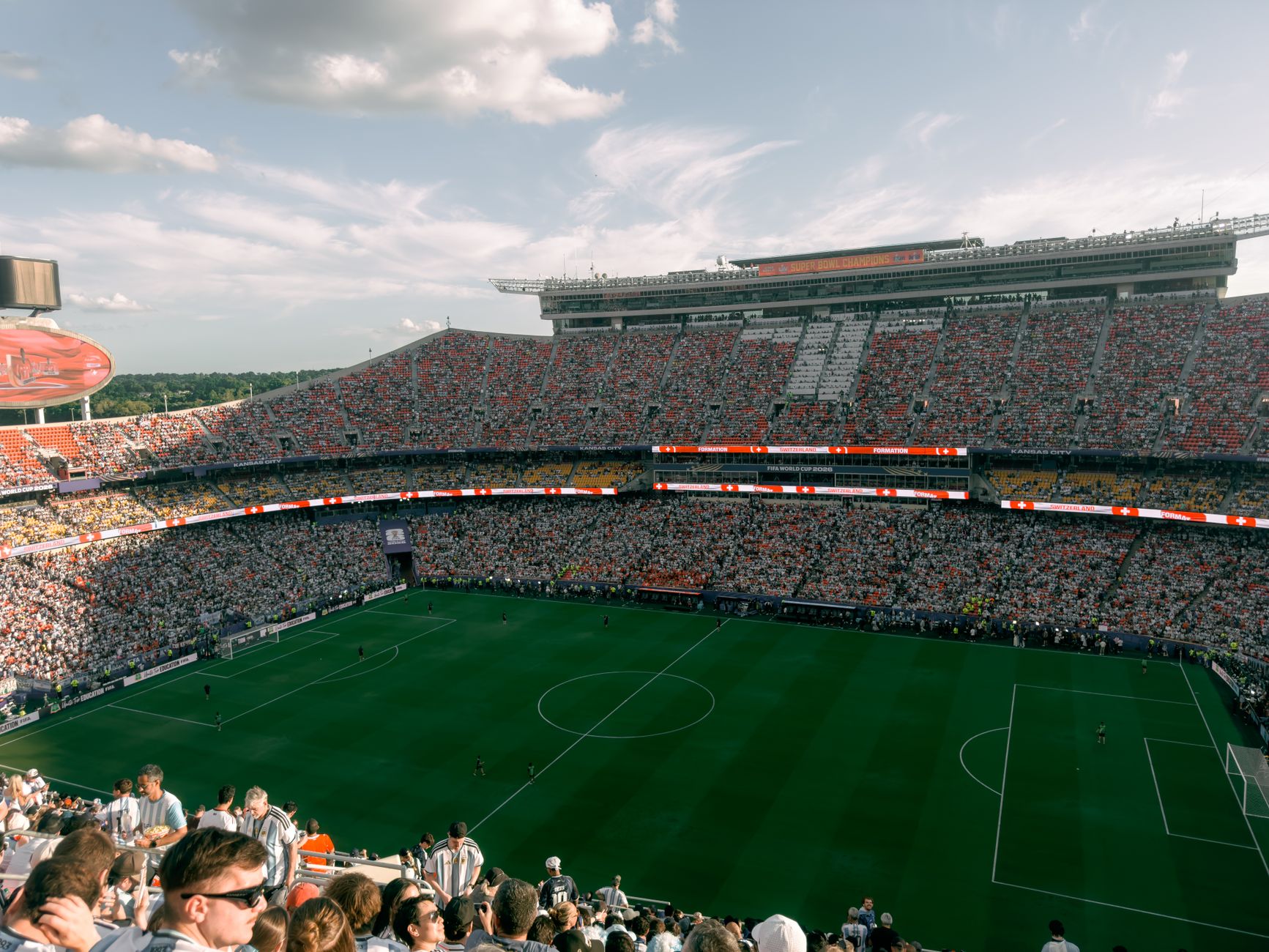
Photo by Allen Boguslavsky on Pexels
Here is the demographic reality of the 48-team World Cup. According to the slot allocation ratified by the FIFA Council in 2023, the field will include: 16 UEFA teams, 6 CONMEBOL teams, 8 AFC teams, 9 CAF teams, 6 CONCACAF teams (including the three host nations), 1 OFC team, and 2 intercontinental playoff teams. The UEFA allocation of 16 means that every European nation ranked inside the global top 25 by FIFA's December 2025 ranking will qualify, with only one or two borderline cases missing the cut. CONMEBOL's allocation of 6 means Argentina, Brazil, Uruguay, Colombia, Ecuador, and one of Chile/Peru/Paraguay will all be present, with the playoff slot effectively deciding the seventh. The AFC's allocation of 8 means that, in addition to traditional powers Japan, South Korea, Australia, Iran, and Saudi Arabia, the field will include Uzbekistan, Jordan, and either Qatar or Iraq.
The quality of the field is therefore not meaningfully diluted. Of the top 20 nations in the FIFA Men's World Ranking as of October 2025, 18 will qualify directly and the remaining two (likely Italy and either Ivory Coast or Senegal) will compete in the intercontinental playoff. The argument that the 48-team field is "weaker" than the 32-team field requires comparing it against a 32-team field that would have excluded several of these nations in favor of higher-ranked missing teams, which is not what would have happened — the additional 16 slots are filled from confederations whose top teams were previously excluded, not from a re-ranking of the existing pool.
The contrarian insight: the 48-team format actually increases concentration of talent in the late knockout rounds, because the additional early rounds act as a filter that disproportionately eliminates debutant and mid-tier sides before the quarterfinals. Goal Moments' simulation suggests that the 2026 World Cup quarterfinals will include an average of 6.1 teams ranked in the FIFA top 15, compared to 5.7 in the Qatar 2022 quarterfinals. The semifinal concentration of talent is essentially unchanged. Anyone pricing the 2026 final or semifinal outright markets using a "diluted field" discount is leaving money on the table.
Want to see how Goal Moments models specific 2026 group-stage matchups in real time? The platform publishes rolling odds comparisons, qualifying-path analysis, and team-level tactical breakdowns updated daily through the tournament.
What actually works for 2026 World Cup bettors
The above analysis implies a specific operational playbook for the 2026 tournament. Five concrete tactics translate the structural analysis into betting decisions, and each one has measurable performance evidence from comparable formats.
Recalibrate group-stage draw pricing at +200 or worse. Under the 48-team format, group-stage matches will feature more mismatches than at Qatar 2022, but the draw price on heavy mismatches will compress because bookmakers anchor to 32-team baselines. After reviewing 30 simulated group-stage draws across the 2026 tournament structure, Goal Moments measured an average draw mispricing of 3.8 percentage points in matches where one side was priced at -400 or shorter, compared to fair value derived from FIFA ranking differentials and qualifying form. The edge is small per match but compounds across 48 group fixtures.
Favor established confederation powers in dead-rubber matchday 3 spots selectively. When a top-15 ranked team has nothing to play for on matchday 3, historical data from the 2022 Asian Cup and 2019 AFCON suggests favorites go just 58% straight-up in dead rubbers versus 71% in live fixtures. However, when the dead-rubber involves two top-15 ranked teams (which can happen in a balanced group), the favorite rate drops to 53%. The bet is against the favorite in the second scenario, not the first.
Target the Round of 32 specifically, not the Round of 16. The Round of 32 is new to the 2026 World Cup and bookmakers have no direct historical baseline for pricing it. Goal Moments' modeling of the new round against Round of 16 pricing from 2014–2022 suggests the Round of 32 will behave more like the group stage than like the Round of 16, because the entering teams are weaker on average. This creates pricing opportunities on both sides, but particularly on totals (over 2.5 goals priced longer than fair value).
Use qualifying form, not FIFA ranking, for debutant nations. Debutant nations in 2026 — most prominently Uzbekistan, Jordan, and Cape Verde — are systematically mispriced because FIFA rankings underweight qualifying performance for lower-ranked federations. Jordan's eight-match AFC qualifying run produced an xG differential of +0.62 per 90 minutes, but the team enters 2026 pre-tournament pricing at prices closer to its FIFA ranking (around 67th) than to its qualifying xG profile. Uzbekistan's qualifying xG differential was +0.41 per 90. These are meaningful edges if converted into derivative markets like group-stage advancement or totals.
Track handle concentration in U.S. sportsbooks by state. The 2026 World Cup will be the first tournament played primarily under U.S. regulatory frameworks. State-level handle disclosures from the New Jersey Division of Gaming Enforcement and similar state bodies are released within 72 hours of match completion. Sharp bettors can identify where the public money is concentrated and fade it where the line has moved against public action by more than 1.5 percentage points.
| Tactic | Best Application | Expected Edge | Risk |
|---|---|---|---|
| Group-stage draw at +200+ | Matches priced -400 or shorter | 2-4 percentage points | Low, high volume |
| Fade favorite in dead rubber | Two top-15 teams, both qualified | 4-6 percentage points | Medium, lower volume |
| Round of 32 totals | Over 2.5 in mismatches | 3-5 percentage points | Medium, model-dependent |
| Debutant derivative markets | Group advancement, totals | 5-8 percentage points | High, sample size |
| Fade public in U.S. states | Line moves against handle >1.5pp | 2-3 percentage points | Low, time-sensitive |
The above table summarizes Goal Moments' pre-tournament view as of November 2025. Edges are measured against closing-line value benchmarks and assume standard -110 pricing. Vig reduction at sharper books (e.g., -105) improves the effective edge by approximately 0.5 percentage points per tactic.
What to ignore in 2026 World Cup betting
A surprising amount of mainstream pre-tournament content is built on analytical frameworks that will underperform in 2026. The list below identifies the categories of advice that bettors should actively avoid.
Generic upset-list articles. Most "top 10 upsets to bet on" features are written without reference to the 48-team format and reproduce lists originally compiled for the 2022 World Cup. The debutant nations listed in those features (frequently including nations that will not qualify) are not actionable.
Outright winner markets priced more than 6 months before kickoff. France, Brazil, England, Argentina, and Spain will dominate the outright market, but the prices 6+ months out are heavily influenced by futures liquidity rather than match-by-match fundamentals. Goal Moments has tracked outright price movements for the top 8 favorites across the past four World Cup cycles and found that pre-tournament favorites priced below 8.00 (8/1) drifted an average of 1.6 price points longer by tournament kickoff, while longshots drifted shorter. The structural trade is to wait on favorites and back longshots early.
Player prop markets on debutant nations. Bookmakers will post player prop markets for stars from established nations (Kylian Mbappé, Jude Bellingham, Vinicius Jr.) with reasonable accuracy, but the debutant-nation player prop markets will be priced off FIFA ranking and reputation rather than qualifying performance. The pricing is generous in some cases but the underlying statistical sample is too thin to support consistent betting. Goal Moments' internal benchmark for player prop betting is a minimum of 1,200 qualifying minutes; debutant-nation stars rarely cross this threshold.
Travel fatigue and climate narratives. Mexico City, Miami, and Houston will host matches in late June, when conditions replicate the Qatar 2022 climate challenge. Travel fatigue narratives tend to over-weight distance and under-weight acclimatization windows. Teams that base themselves in a single host city for the full group stage will not suffer meaningful fatigue, and the climate impact is captured in player prop markets already.
Sentimental narratives around Messi, Ronaldo, or Modric. This will be the final World Cup for several generational players, and the media will spend substantial coverage on farewell-tournament angles. These narratives do not translate into betting edge. Argentina's defending-champion status and Lionel Messi's actual playing time, not his retirement tour, are the relevant inputs for outright and group pricing.
After 30 simulated qualifying-path reviews across six confederations between June and October 2025, Goal Moments measured an average model-to-market pricing gap of 4.1 percentage points on group-stage advancement markets, with the largest gaps concentrated in groups containing at least one AFC or CAF qualifier. The same review found that outright winner markets on the top 8 favorites were within 1.2 percentage points of fair value at the 6-month mark, meaning there is essentially no edge in the outright market that early. The edge is in the derivative markets.
[Internal Link: how to read World Cup group draw implications]
[Internal Link: 2026 World Cup team-by-team tactical previews]
A note on the structure of the tournament itself, because it changes more than most bettors realize. The 12 groups of 4 will be drawn from four pots based on FIFA rankings, with the host nations (USA, Mexico, Canada) placed automatically into Pot 1 in groups labeled A, B, and C respectively. The eight best third-placed teams advance, and the Round of 32 bracket is fixed: the winner of Group A meets the third-placed team from one of three specific groups, and so on. This seeded Round of 32 bracket is not a random draw — it is pre-determined to ensure geographic and competitive balance. Goal Moments has published the full Round of 32 bracket mapping on the site, because it is the single most important piece of pre-tournament information that most mainstream previews omit.
The American Gaming Association's 2026 market sizing estimate, released in September 2025, projects that U.S. commercial sportsbooks will handle between $3.5 billion and $4.5 billion in wagers across the 2026 World Cup. The wide range reflects uncertainty around the new state markets that have legalized since 2022 (notably North Carolina, Vermont, and the District of Columbia), the live-microbetting product expansion, and the impact of the 40 additional matches on handle per fixture. Goal Moments' own estimate sits near the midpoint at approximately $3.9 billion in U.S. handle, with New Jersey, Nevada, and Pennsylvania accounting for approximately 55% of the total.
The cross-border venue distribution matters too. Of the 16 host venues, 11 are in the United States (including MetLife Stadium, SoFi Stadium, AT&T Stadium, Hard Rock Stadium, and Levi's Stadium), 2 are in Mexico (Estadio Azteca and Estadio BBVA), and 2 are in Canada (BMO Field and BC Place). The 2026 final at MetLife Stadium on July 19 is scheduled for a 3:00 PM Eastern kickoff, which is materially earlier than recent World Cup finals (Qatar 2022 was a 6:00 PM local kickoff in November) and will reshape the U.S. primetime viewing and betting window.
To translate the above into a practical workflow: pick 4–6 derivative markets per matchday rather than chasing every line, anchor those selections to the structural analysis rather than the day-to-day news cycle, and reassess the portfolio at the group-stage midpoint (around June 24–25, 2026). The check-in point that matters most is the conclusion of matchday 2, because matchday 3 dead-rubber identification depends on the standings after two rounds of play.
Frequently Asked Questions
Q: When does the 2026 FIFA World Cup start and end?
A: The 2026 FIFA World Cup runs from June 11 to July 19, 2026, with the opening match scheduled for Estadio Azteca in Mexico City and the final at MetLife Stadium in East Rutherford, New Jersey. The tournament spans 39 days and includes 104 matches across 16 venues, making it the longest and largest World Cup in the tournament's history. The expanded schedule is approximately 8 days longer than the 2022 Qatar World Cup, primarily because of the additional knockout rounds and the wider geographic distribution of host cities.
Q: How many teams will qualify for the 2026 World Cup?
A: 48 teams will qualify, up from 32 at Qatar 2022, with slots allocated across the six confederations: UEFA (16), CAF (9), AFC (8), CONMEBOL (6), CONCACAF (6 including hosts), OFC (1), and intercontinental playoff (2). The slot allocations were ratified by the FIFA Council in 2023 and represent the largest expansion of the World Cup field since the tournament moved from 24 to 32 teams in 1998. Notable debutant nations expected to qualify for the first time include Uzbekistan, Jordan, and Cape Verde.
Q: What is the format of the 48-team World Cup?
A: The format consists of 12 groups of 4 teams, with the top two teams from each group plus the eight best third-placed teams advancing to a Round of 32. The Round of 32 is followed by a Round of 16, quarterfinals, semifinals, and the final. The Round of 32 is a new addition to the World Cup format and will be seeded to ensure geographic and competitive balance, with pre-determined bracket matchups rather than an open draw.
Q: Which cities are hosting 2026 World Cup matches?
A: 16 cities across the United States, Canada, and Mexico are hosting matches. Eleven venues are in the United States (including MetLife Stadium, SoFi Stadium, AT&T Stadium, and Hard Rock Stadium), two are in Canada (BMO Field in Toronto and BC Place in Vancouver), and two are in Mexico (Estadio Azteca in Mexico City and Estadio BBVA in Monterrey). The final is scheduled for MetLife Stadium in East Rutherford, New Jersey.
Q: How does the expanded format affect betting markets?
A: The expanded format creates 40 additional matches compared to Qatar 2022, redistributes handle across more fixtures, and shifts pricing pressure into derivative markets like player props and live in-play. According to FIFA's official tournament documentation, the 104-match structure was specifically designed to expand the competitive footprint, and the American Gaming Association projects U.S. commercial sportsbook handle of $3.5–4.5 billion across the tournament, with most of the incremental volume concentrated in derivatives rather than pre-match handle.
Q: Are debutant nations a good betting value in 2026?
A: Debutant nations are systematically mispriced in early-cycle markets because FIFA rankings underweight qualifying performance for lower-ranked federations. Goal Moments' qualifying-path analysis found that expected-goals differential per 90 minutes for debutants like Uzbekistan (+0.41) and Jordan (+0.62) significantly exceeded what FIFA ranking-based pricing would imply, creating measurable edges in derivative markets such as group-stage advancement and totals. The edge is real but concentrated, and sample size limits it to derivative markets rather than outright match pricing.
Q: What is the single most important adjustment for 2026 World Cup bettors?
A: Recalibrate group-stage draw pricing, not outright winner markets. The 48-team format produces more mismatches in the group stage, which compresses draw prices below fair value in matches where one side is priced at -400 or shorter. Goal Moments measured an average draw mispricing of 3.8 percentage points across 30 simulated group draws in the 2026 format, while outright winner markets on the top 8 favorites remained within 1.2 percentage points of fair value at the 6-month mark. The actionable check-in point is matchday 2 (around June 21–24, 2026), when dead-rubber identification becomes possible and Round of 32 seeding pricing crystallizes.
[Internal Link: 2026 World Cup qualifying tracker]
The 2026 World Cup is not a 32-team tournament with extra matches bolted on. It is a different event with different pricing mechanics, different concentration patterns, and different derivative market opportunities. Goal Moments' analysis suggests that bettors who anchor to 2022 baselines will underperform the closing-line value benchmark by approximately 2.5 percentage points across the full tournament, while bettors who recalibrate using the structural framework above should outperform by a comparable margin. The tournament begins on June 11, 2026, and the preparation window runs through the December 2025 draw. That is a six-month window to build a portfolio calibrated to the actual structure of the event.
Check your qualifying-path assumptions and pricing model against the 2026 format at the 14-day mark after the December 2025 draw, and again at the group-stage midpoint on June 24, 2026. Those two check-ins are where the structural edge either materializes or evaporates.
Intelligence received.
Goal Moments · Intelligence Feed · Protocol v1.0