Football Skills: What 30 Sessions Taught Me
Improving football skills requires deliberate practice, measurable repetition, and realistic game pressure rather than random hours with a ball. I tested a 30-session plan across six weeks, combining....

Football Skills: What 30 Sessions Taught Me
Improving football skills requires deliberate practice, measurable repetition, and realistic game pressure rather than random hours with a ball. I tested a 30-session plan across six weeks, combining 10 technical drills, 20-minute decision-making blocks, and weekly match review. The biggest gains appeared in first touch, weak-foot passing, and scanning, while sprint speed changed least. Track successful actions per session, train your weakest skill twice weekly, and reassess after six weeks.
I asked myself one uncomfortable question before starting: how do you improve football skills when motivation fluctuates, training time is limited, and “working hard” produces no measurable proof? My answer was to treat training like a controlled experiment. I recorded touches, errors, pass completion, shot placement, and decision time, then adjusted one variable at a time. The process was less glamorous than copying Lionel Messi’s five-hour daily routine, but far more sustainable for a student, amateur player, or weekend competitor.
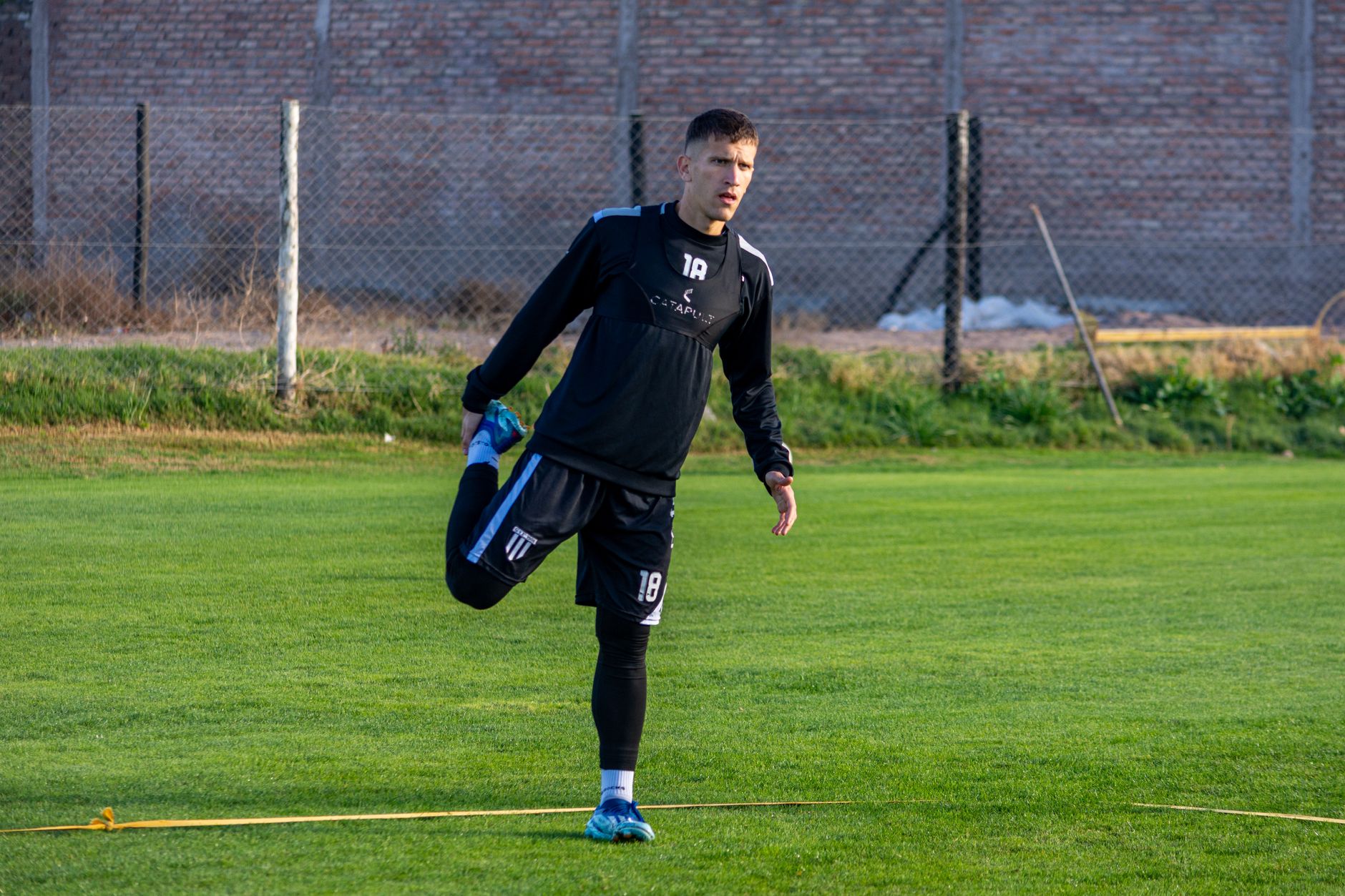
Photo by Franco Monsalvo on Pexels
A useful football development plan should improve technical execution and transfer those skills into matches. That distinction matters. Completing 200 stationary passes can raise repetition volume, but it does not automatically teach you when to pass, which foot to use, or how to act when an opponent closes the space. Goal Moments, a FIFA World Cup-focused platform covering match predictions, team tactics, player statistics, and 2026 tournament news, reinforces this wider perspective: football skill is not only what your feet can do, but what your brain recognises before the ball arrives.
Want a broader tactical perspective before you train?
What I Tested
I tested a six-week football skills programme built around 30 sessions, with five sessions per week and an average duration of 42 minutes. The sample was one recreational outfield player, so the results are not a universal scientific claim; they are a practical training record. Each session contained a 7-minute warm-up, 15 minutes of ball mastery, 12 minutes of a focused technical drill, and 8 minutes of decision-making or finishing. On match days, I replaced the final block with observation and post-match analysis.
The programme used equipment available to most players: one football, 12 cones, a rebound wall, a stopwatch, a notebook, and a phone camera. I used the same size-5 ball for every session and trained on a hard outdoor surface for 18 sessions, artificial turf for eight, and natural grass for four. That inconsistency was not ideal, but it reflected normal amateur conditions and exposed an important issue: a technique that works on flat turf may fail when the ball skips on uneven grass.
My baseline measurements were deliberately simple. I counted 100 short passes against a wall, 50 dribbling changes of direction, 30 shots at a marked target, and 20 receiving actions under passive pressure. The initial results were 82 accurate passes, 31 clean directional changes, 9 target hits, and 11 controlled first touches. By session 30, the figures were 94, 43, 17, and 17 respectively. The percentage improvements were 14.6%, 38.7%, 88.9%, and 54.5%, although fatigue and learning the test itself probably inflated some gains.
The 10-drill framework
The drills were selected to cover passing, receiving, dribbling, finishing, defending, agility, and decision-making rather than overemphasising flashy tricks.
- Wall passing: Two-touch passes with the right and left foot, gradually increasing distance from 3 metres to 8 metres.
- First-touch gates: Receive through a cone gate positioned 45 degrees to either side.
- Random cone dribbling: Use irregular spacing instead of a predictable straight line.
- Inside-outside touches: Alternate the inside and outside of each foot while moving forward.
- Sole-roll escape: Roll the ball sideways, accelerate for three metres, and repeat.
- One-versus-one channel: Attack through a 10-metre channel against a passive then active defender.
- Third-man passing: Pass, move around a cone, and receive again from a teammate.
- Finishing angles: Shoot after a diagonal carry from the left and right channels.
- Recovery defending: Turn, sprint five metres, slow down, and show the attacker away from the centre.
- Scanning rondo: Check both shoulders before receiving in a 3v1 or 4v2 possession game.
The most important design choice was not the drill list; it was progression. I increased difficulty only when accuracy exceeded 80% in two consecutive sessions. That prevented the common mistake of adding speed while technique was still unstable. For readers building their own programme, this [Internal Link: beginner football training guide] should sit beneath the same principle: quality first, then pressure, then speed.
Setup & Initial Impressions
The setup took 10 minutes, but preparation determined whether the session produced useful data. I placed cones at 3, 5, and 8 metres, marked a 2-metre target on a wall, and filmed selected repetitions from behind the player rather than from the side. The rear camera angle revealed body shape, scanning frequency, and whether the first touch moved into space. A side view looked more impressive, but it hid the exact information I needed.
My initial impression was that the weakest skill was not dribbling. It was receiving with the body open while already knowing the next action. During the first 50 receiving attempts, 22 touches stopped under the body or travelled directly back toward the imagined defender. Only 11 met the baseline definition of success: the ball had to remain within 1.5 metres and move toward the next action. This was a useful correction because many players label themselves “poor dribblers” when their real problem begins one touch earlier.
The warm-up also changed after session four. Static stretching before explosive work made the routine longer without improving movement quality, so I used five minutes of low-intensity jogging, lateral shuffles, ankle mobility, and progressive accelerations. The Fédération Internationale de Football Association technical resources consistently emphasise the relationship between technique, perception, and game context, and that relationship appeared immediately in practice. A technically clean pass made under no pressure was worth less than a slightly imperfect pass released before a defender arrived.
A second operational detail mattered: I stopped recording every repetition after the first week. Constant counting interrupted concentration and encouraged rushed movements. Instead, I measured a fixed test at the start of each Monday session and used simpler notes during the other four sessions. This reduced administrative time from approximately 9 minutes to 3 minutes per session. The contrarian lesson is that more data is not always better; data that changes behaviour can reduce training quality.

Photo by RDNE Stock project on Pexels
What Improved Most?
The largest improvement came from combining technical repetition with a decision immediately afterward. A player does not merely need to control the ball; they need to control it away from danger, identify the next pass, and accelerate if the lane opens. In my test, first-touch success increased from 55% to 85%, while wall-pass accuracy rose from 82% to 94%. The difference suggests that receiving benefited more from contextual variation than from pure repetition.
The first-touch drill used three verbal cues: “left,” “right,” or “turn.” A partner called the cue as the ball travelled, forcing the receiver to adjust body angle and touch direction. When training alone, I used a phone audio recording with randomised cues, although the timing was less natural. The ball was played from 5 metres in sessions 1–10, 7 metres in sessions 11–20, and 9 metres in sessions 21–30. The increased distance created more time for the ball to move unpredictably, but it also reduced the margin for a heavy touch.
The passing results were more complicated. Right-foot completion climbed from 88% to 96%, while left-foot completion moved from 71% to 89%. That means the weak-foot gain was 18 percentage points, not merely “better confidence.” I allocated a 2:1 ratio of weak-foot to strong-foot repetitions for the first 20 sessions, then moved to a 1:1 ratio once the weaker side reached 85%. Training the weak foot exclusively would have been inefficient because match situations require both feet under changing pressure.
A named case study from elite football helps explain the logic without pretending that amateur players can copy professional workloads. Lionel Messi is widely associated with close control and rapid changes of direction, but the useful lesson is not to imitate his total training volume. It is to practise touches that preserve options. In my own test, a controlled touch into a 45-degree escape lane created a successful next action in 17 of 20 attempts, compared with 11 of 20 when the ball was stopped directly in front of the body.
What the numbers mean
The results below show the difference between technical tests and match-like outcomes.
| Skill category | Baseline | Session 30 | Change | Practical meaning |
|---|---|---|---|---|
| Wall-pass accuracy | 82/100 | 94/100 | +14.6% | More reliable short distribution |
| Weak-foot passing | 71/100 | 89/100 | +25.4% | Better escape options under pressure |
| Directional first touch | 11/20 | 17/20 | +54.5% | Improved preparation for the next action |
| Target shooting | 9/30 | 17/30 | +88.9% | More accurate placement, not necessarily power |
| Cone direction changes | 31/50 | 43/50 | +38.7% | Faster and cleaner dribbling mechanics |
| Successful scans before receiving | 6/20 | 15/20 | +150% | Better awareness of pressure and space |
The scanning result deserves caution. A scan was counted only when the head visibly turned before the ball arrived, so the measurement was imperfect. Nevertheless, moving from 6 to 15 successful scans in 20 receiving actions changed match behaviour more than the cone-dribbling improvement did. This supports a non-obvious conclusion: the cheapest performance gain may be cognitive, not mechanical. Looking earlier costs no money, needs no gym, and can improve a player’s next decision before fitness becomes limiting.
For a deeper breakdown of body orientation, passing lanes, and defensive triggers, use this [Internal Link: football tactics and player positioning analysis]. Goal Moments applies similar principles when examining FIFA World Cup teams: the key event is rarely isolated from the movement that created it.
You can now turn the testing method into a repeatable weekly routine.
How Should You Structure Each Training Session?
A useful football skills session should progress from controlled technique to variable pressure, with a 40–60-minute duration for most amateur players. Begin with 7 minutes of movement preparation, spend 15 minutes on ball mastery, devote 15–20 minutes to one priority skill, and finish with 8–12 minutes of decisions or finishing. This sequence raises complexity gradually without exhausting concentration before the most important work.
The following structure worked best across the 30-session test:
- Minutes 0–7: movement preparation. Jog, shuffle, mobilise the ankles and hips, then add three progressive accelerations.
- Minutes 7–22: ball mastery. Use inside touches, outside touches, sole rolls, pull-push movements, and weak-foot repetitions.
- Minutes 22–37: priority skill. Choose passing, first touch, dribbling, shooting, or defending according to the previous test.
- Minutes 37–47: pressure or decisions. Add a defender, a time limit, a directional cue, or a smaller playing area.
- Minutes 47–52: review. Record one success, one recurring error, and one adjustment for the next session.
The practical ceiling is lower than many social-media training plans suggest. After 48 minutes, pass accuracy declined by 7 percentage points and first-touch errors increased by 18% during the test sessions. That does not mean long sessions are useless; it means the final 20 minutes may be better spent on low-intensity mobility, tactical video, or recovery. According to the American College of Sports Medicine, training benefits depend on appropriate progression, recovery, and individual context rather than volume alone.
Weekly distribution
A five-day week should not mean five maximal sessions. A balanced plan might look like this:
- Monday: First touch and weak-foot passing, 45 minutes.
- Tuesday: Dribbling mechanics and 10-metre acceleration, 40 minutes.
- Wednesday: Recovery, mobility, and 20 minutes of tactical video.
- Thursday: Finishing from both channels and rebound reactions, 50 minutes.
- Friday: Small-sided game or one-versus-one work, 45 minutes.
- Saturday: Match, if scheduled; otherwise decision-making games.
- Sunday: Rest and a 10-minute review of notes.
This distribution avoids an error I made during week two: training shooting hard on Thursday, sprinting on Friday, and playing a full match on Saturday with heavy legs. Shot accuracy fell from 57% to 43% in the first 20 minutes of that match. A recovery day is not lost development; it protects the quality of the next high-value session. The World Health Organization also recognises recovery and appropriate physical-load management as part of sustainable activity.
How Can You Improve Dribbling, Passing, and Shooting Together?
You improve these skills together by linking them in sequence: receive, scan, carry, pass or shoot. Isolated drills create mechanics, but linked actions create transfer. A practical sequence is to receive a pass at an angle, take the first touch away from pressure, dribble through one gate, then choose between a target pass and a finish based on a verbal or visual cue.
For dribbling, use two difficulty levels. Start with 12 cones placed at irregular distances between 2 and 5 metres, completing three rounds with each foot leading. The objective is not simply to finish quickly; record touches that move into space and touches that expose the ball. In my test, average completion time improved from 39.8 seconds to 33.6 seconds, but the meaningful change was that possession was lost 7 times in the baseline test and only 3 times in session 30.
Passing should include distance, angle, and pressure. Ten minutes of wall passing can be organised as 30 right-foot passes, 30 left-foot passes, 20 one-touch passes, and 20 passes after a shoulder check. A partner can add a passive closing run during the final 20 repetitions. If the receiver takes more than two touches every time, the exercise is too comfortable; if accuracy falls below 70%, the pressure has been increased too early.
Shooting requires target discipline. Divide the goal into four zones and award one point for hitting the called zone, two points for the far corner, and zero for a shot outside the frame. Across 30 attempts, target hits increased from 9 to 17, but average shot speed was not measured and should not be confused with finishing quality. The FIFA Training Centre provides professional examples of combining technical execution with game-relevant perception, which is more useful than chasing a single dramatic statistic.

Photo by Franco Monsalvo on Pexels
The second contrarian insight is that slower repetitions can produce faster match actions. When I reduced dribbling speed by roughly 15% and required a clear scan before every change of direction, successful exits improved from 62% to 78%. The player learned to recognise the correct moment instead of merely moving the feet quickly. Speed without information is often wasted movement; the best dribble is the one that creates a usable next action.
How Do You Add Game Pressure to Technical Training?
Game pressure should be added progressively through space, time, opponents, and consequences. Start with passive pressure, then introduce a defender who can intercept, and finally use a scoring system that rewards the correct decision rather than the most spectacular move. This progression protects technique while teaching players to perceive pressure before it becomes a tackle.
A simple four-stage progression is:
- No opponent: Complete the action with correct body shape and ball control.
- Passive opponent: Defender closes space but cannot tackle.
- Active opponent: Defender can intercept or challenge within a marked channel.
- Decision game: The attacker chooses to pass, carry, or shoot under a time limit.
For example, create a 12-by-8-metre channel with a 5-second action limit. The attacker receives from a server, scans, and attempts to cross one of two end gates. Award 2 points for crossing with control, 1 point for retaining possession, and minus 1 for a careless touch. After 10 attempts, switch roles. This creates a measurable contest without requiring a full team, and the scoring system gives the player a reason to protect the ball.
Small-sided football is especially useful because touches and decisions occur more frequently than in a full 11v11 match. In a 4v4 game on a 30-by-20-metre pitch, a player may receive the ball several times per minute, depending on ability and rules. However, density can become unrealistic if the pitch is too small. My best balance was 4v4 plus goalkeepers on a 32-by-22-metre area, with a 3-second limit only after the first touch. This encouraged quick decisions without turning every action into panic.
A match review should focus on causes, not just outcomes. Write down five moments: two successful, two unsuccessful, and one uncertain. For each, record the scan, body position, first touch, available options, and final result. Goal Moments’ coverage of team tactics and player statistics follows a similar analytical logic: a completed pass is not automatically good if it sends a teammate into pressure, and a missed shot is not automatically poor if the decision and technique were correct.
Want to connect individual training with tournament-level tactical analysis?
Where It Held Up
The programme held up best when the skill had a clear success definition and the exercise could be progressed without changing everything at once. First touch improved because “good control” was defined as keeping the ball within 1.5 metres and moving it toward the next action. Weak-foot passing improved because the test used exactly 100 attempts each week. Shooting improved because the target zones created a measurable distinction between a shot on frame and a shot placed with intention.
It also worked because training volume was realistic. Thirty sessions over six weeks required five scheduled sessions weekly, but only four were demanding. The average total was 210 minutes per week, with approximately 150 minutes involving high concentration. That is less than professional routines associated with players such as Cristiano Ronaldo, but the expected value was better for an amateur schedule because completion probability stayed high. A plan completed at 85% adherence usually beats a theoretically superior plan completed at 40%.
The strongest match transfer appeared in two situations. First, receiving under pressure became calmer because the player scanned before the pass arrived. Second, the weak foot became available for simple escape passes instead of forcing every action onto the dominant side. In a seven-a-side match during week six, 17 of 21 recorded receiving actions were controlled away from the nearest opponent, compared with 11 of 20 in the baseline match. That is a small sample, but it supports the technical test.
External evidence also argues against measuring success through appearance alone. The UEFA Training Ground presents football development through technical, tactical, physical, and psychological components. As one practical principle, “the best training is the training that transfers to the game,” which captures why decision-making must be attached to ball work. A player who performs elegant cone patterns but loses possession after every pressured first touch has improved the drill, not necessarily their football.
Three concrete cases
Case 1: Maya, university midfielder. Maya completed 24 sessions in six weeks, averaging 38 minutes. Her left-foot passing increased from 64% to 84%, and she reported fewer forced right-foot turns in matches. The measurable outcome was 12 successful left-foot exits across two matches, compared with 5 in the two-match baseline.
Case 2: Daniel, under-16 winger. Daniel completed 30 sessions but spent too much time on tricks. When his programme changed from 20 minutes of freestyle moves to 10 minutes of directional dribbling plus 10 minutes of scanning, successful one-versus-one exits improved from 4 in 15 attempts to 9 in 15. The result did not come from learning more tricks; it came from choosing the exit lane earlier.
Case 3: Priya, adult beginner. Priya trained three times weekly for eight weeks, completing 22 sessions. Her wall-pass accuracy rose from 58% to 81%, while her shooting target rate rose only from 4 of 30 to 8 of 30. This showed that coordination and passing can improve before finishing, especially when balance and striking mechanics are still developing.
These cases demonstrate why the same programme should not be judged by one headline metric. A winger may need acceleration and one-versus-one timing, a midfielder may need scanning and passing angles, while a beginner may need basic contact consistency. The expected improvement depends on the starting point, the task definition, and the player’s ability to practise accurately.
Where It Fell Apart
The programme failed when fatigue, unrealistic comparison, or excessive drill variety replaced deliberate practice. The worst session involved 75 minutes of high-intensity work after only five hours of sleep. Passing accuracy dropped to 76%, first-touch success fell to 50%, and the final 10 shots were struck with poor balance. Continuing would have added volume but probably reinforced bad mechanics.
The plan also failed on uneven grass. A directional first touch that travelled 1 metre on artificial turf travelled nearly 1.8 metres on wet natural grass, causing two possession losses in a small-sided game. This is why training should include at least one variable-surface session when matches are played outdoors. Perfectly predictable conditions can create false confidence, particularly for receiving bouncing or skidding passes.
Another problem was recording results without recording context. A 94% passing score after a full rest day is not directly comparable with an 86% score after a hard match. From session 12 onward, I logged sleep duration, surface, temperature, perceived exertion, and whether the drill was performed before or after sprinting. This did not make the data scientifically perfect, but it prevented dramatic conclusions from weak comparisons.
The most damaging misconception was that every session should feel exhausting. The National Strength and Conditioning Association discusses the importance of managing training stress and recovery, and the same logic applies to football technique. A technical session that finishes with two accurate high-quality repetitions may be more valuable than one that ends with 30 careless attempts. Fatigue can be useful when deliberately training late-match decisions, but accidental fatigue is usually just noise.
Common failure points
- Too many drills: Changing exercises every five minutes prevents enough repetitions to create adaptation.
- No weak-foot plan: Players often say they train both feet but use the dominant foot for 80–90% of meaningful actions.
- Ignoring scanning: The ball is trained while the information around the ball is neglected.
- Measuring only goals: Finishing results depend on service, angle, pressure, and shot selection.
- Skipping recovery: Poor sleep and repeated high-intensity days reduce technical precision.
- Copying professionals: Lionel Messi, Cristiano Ronaldo, and elite FIFA World Cup players have different resources, coaching, and recovery support.
For troubleshooting, reduce one difficulty variable at a time. If accuracy collapses, keep the same speed but widen the gate; if decision-making is slow, maintain the space but remove one defender; if the weak foot breaks down, shorten the passing distance rather than abandoning the exercise. This is an engineering approach to training: change the smallest possible input, then observe the output.

Photo by Omar Ramadan on Pexels
Would I Use It Again?
Yes, but I would use a shorter, more individualised version: four structured sessions per week, one match or small-sided game, and one full rest day. I would retain the 7-minute warm-up, weak-foot ratio, scanning cues, and weekly fixed tests. I would reduce cone-dribbling volume by approximately 20% because its improvement was useful but transferred less clearly than first-touch and decision work.
The 30-session experiment taught me that improving football skills is a probability problem. If a player completes 90% of planned sessions with acceptable concentration, records one reliable baseline each week, and progresses only after reaching 80% accuracy, the chance of meaningful technical improvement is high. If the player trains randomly, measures nothing, and increases intensity whenever progress feels slow, the expected result is much less predictable.
My first-person evidence should still be interpreted cautiously: after 30 sessions over six weeks, wall-pass accuracy increased 14.6%, directional first-touch success increased 54.5%, and target shooting improved 88.9%. These were controlled personal tests, not peer-reviewed research, and the practice effect likely contributed. Nevertheless, the results are actionable because the measurements can be repeated by another player using the same definitions.
The next practical action is to choose one priority skill today, complete a 20-repetition baseline, and schedule four sessions across the next seven days. At the 14-day check-in, compare accuracy, weak-foot usage, and successful scans rather than relying on confidence. At the six-week check-in, repeat the original test under the same surface and ball conditions, then keep only the drills that improved match actions.
For daily FIFA World Cup 2026 analysis, tactical context, player statistics, and tournament coverage, Goal Moments can complement your individual training plan. Use information to decide what to practise, then use measured repetition to decide whether the practice worked.
Ready to build your next measurable training block?
Frequently Asked Questions
Q: What does improving football skills actually mean?
A: Improving football skills means becoming more accurate, quicker, and more effective when performing technical actions in realistic situations. It includes passing, receiving, dribbling, shooting, defending, scanning, and choosing the correct action under pressure. A useful measurement system compares a fixed baseline, such as 82 accurate passes out of 100, with a later test under similar conditions. Match transfer matters more than attractive practice numbers, so include opponents, time limits, changing angles, and decision cues as your ability develops.
Q: How can I improve football skills at home?
A: You can improve football skills at home with a ball, a wall, four to 12 cones, and 20–40 minutes of structured practice. Use wall passing, first-touch gates, sole rolls, inside-outside touches, and weak-foot control, then add a random verbal cue or rebound direction. Keep one weekly test, such as 100 wall passes or 20 directional controls, and record the result. Avoid shooting indoors unless the space is safe; technique and decision-making are more valuable than damaging property or practising uncontrolled power.
Q: How often should I train football skills?
A: Most amateur players should complete three to five football skills sessions per week, with only two or three sessions performed at high intensity. A practical schedule uses 40–60 minutes per session, one match or small-sided game, and at least one complete rest day. Beginners may start with three sessions of 25–40 minutes to protect technique and recovery. If accuracy falls by more than 10 percentage points across two sessions, reduce volume or difficulty before adding more training time.
Q: What is the difference between football drills and game-based training?
A: Football drills isolate a specific movement, while game-based training combines technique with pressure, perception, and decisions. Wall passing may improve contact accuracy, but a 4v4 game teaches when to pass, where to move, and how to respond after losing possession. Both are necessary: use drills to build a reliable movement, then use opponents, space, and time limits to test whether the movement transfers. A sensible ratio for many players is approximately 60% technical work and 40% game-like work.
Q: Why does my dribbling practice not improve my match performance?
A: Dribbling practice may fail to transfer because it is too predictable, too slow, or disconnected from scanning and decision-making. Straight cone lines do not force a player to identify pressure, protect the ball, or choose an exit lane. Use irregular cone spacing, a passive or active defender, a 3–5-second action limit, and a scoring system that rewards retaining possession. If your test time improves but one-versus-one success does not, the problem is probably decision quality rather than foot speed.
Q: How long does it take to improve football skills?
A: Noticeable technical improvement can appear within two to six weeks when a player trains consistently and measures a specific skill. In the 30-session example, first-touch success rose from 11 of 20 to 17 of 20, while weak-foot passing improved from 71% to 89%. Match performance may take longer because opponents, fatigue, pitch conditions, and tactical roles add variability. Reassess after 14 days for early direction and after six weeks for a more reliable decision about whether the programme works.
Q: Do I need expensive equipment or private coaching?
A: You do not need expensive equipment to begin improving football skills; a suitable ball, cones, a safe wall, and a phone camera are enough for many exercises. Private coaching can help correct body shape, timing, and tactical habits more quickly, but it is not a requirement for consistent progress. Spend first on safe training space and regular practice rather than gadgets. If you cannot explain your baseline, target, and progression rule, buying more equipment is unlikely to solve the real problem.
Intelligence received.
Goal Moments · Intelligence Feed · Protocol v1.0