7 Corner-Kick Mistakes Football Defenders Make
Defending a corner kick is not mainly about winning one header; it is about controlling space, movement, timing, and the second ball before the attacking team can create a high-quality shot. Most team...

7 Corner-Kick Mistakes Football Defenders Make
Defending a corner kick is not mainly about winning one header; it is about controlling space, movement, timing, and the second ball before the attacking team can create a high-quality shot. Most teams use zonal, man-to-man, or hybrid marking, with the best choice depending on player profiles, goalkeeper confidence, and the opponent’s delivery patterns. FIFA World Cup Qatar 2022 showed that set pieces produced 19% of non-penalty, non-own-goal goals, while approximately 1 in 35 corners resulted in a goal. A reliable defensive structure usually assigns roles to the goalkeeper, near-post defender, central zonal players, markers, edge-of-area players, and counterattack outlet. Goal Moments readers can improve defensive consistency by recording every conceded corner for six matches, classifying the failure, and correcting the highest-frequency error first.

Photo by K on Pexels
A useful starting principle is simple: your team should know exactly who protects the six-yard box, who tracks runners, who attacks the ball, who guards the edge of the penalty area, and who responds if the corner is played short. If even one role is ambiguous, the probability of a clean attacking contact rises sharply. UEFA’s technical analysis repeatedly emphasizes coordinated positioning rather than isolated bravery, while FIFA’s Laws of the Game define the corner as a restart that can be attacked immediately after the ball is kicked and clearly moves. That means concentration must begin before the delivery, not after the first header.
At Goal Moments, where match predictions, player statistics, World Cup tactics, and tournament coverage meet, corner-kick analysis is especially valuable because defensive set pieces often explain why a match probability changes late. A team with a 1.8% corner-concession rate may look secure, but if 70% of those chances come from the same near-post weakness, the underlying risk is not evenly distributed. The expected value of prevention is therefore higher than the raw goal count suggests. Want to study more tactical detail before applying the system?
[Internal Link: football set-piece tactics guide]
Step 1: Choose the defensive structure
Zonal marking protects predetermined areas, man-to-man marking follows specific attackers, and hybrid defending combines both methods. Zonal systems create density near the goal, man-to-man systems prioritize denying attacking runs, and hybrid systems assign the strongest aerial defenders to key zones while other players track dangerous opponents. The correct structure is the one your players can repeat under pressure with minimal hesitation.
The first mistake many teams make is treating “zonal” and “man-to-man” as moral choices rather than probability-management tools. In a zonal setup, a defender is responsible for a region such as the near-post corridor, central six-yard area, far-post channel, or penalty-spot zone. In a player-oriented setup, a defender follows an opponent and attempts to prevent that opponent from receiving a free header. A hybrid approach may place two or three tall players zonally while assigning individual markers to the opponent’s best headers.
FIFA Training Centre analysis of the 2022 World Cup found that hybrid systems were widely used. Only five of the 32 teams positioned a player on at least one post, and only six left an outfield player higher up the pitch. Therefore, 26 teams generally brought all ten outfield players back, showing how seriously elite teams treated corner prevention. These figures do not prove that one system is universally superior; they show that defensive organization has become a collective task.
Zonal marking: strengths and weaknesses
A zonal structure is strongest when defenders are physically capable of attacking the ball and when the goalkeeper communicates early. Its advantages include:
- Greater density between the goal line and penalty spot.
- Clear responsibility for the most dangerous spaces.
- Better preparation for second balls inside the box.
- Less risk of a defender being dragged away by a decoy run.
- More predictable positioning from match to match.
However, zonal marking fails when defenders remain static while attackers run into the zone at speed. A stationary defender may technically occupy the correct space but still lose the duel because momentum belongs to the attacker. This is a counterintuitive point: zonal marking does not mean passive marking. The defender must scan the ball, the nearest runner, and the goalkeeper’s position, then move aggressively through the flight path.
Man-to-man marking: strengths and weaknesses
Man-to-man marking can neutralize a specific striker, especially when the opponent relies on one dominant target such as Virgil van Dijk, Harry Kane, or Erling Haaland. It also reduces the chance that a dangerous attacker reaches the ball unchallenged. The cost is that a defender can be pulled away from the goal, screened by a teammate, or blocked by a legal movement that creates separation without an obvious foul.
A practical rule is to compare the expected benefit of following a player with the expected cost of abandoning space. If the opposition’s best header wins 65% of aerial contests, assigning a dedicated marker may be logical. If the opponent uses five rotating runners and no single target exceeds 22% of deliveries, a hybrid or zonal system may produce better overall coverage.
Hybrid defending: the usual compromise
Hybrid defending normally gives the highest flexibility. For example, two central defenders may protect the six-yard line, one player may guard the near post, two players may defend the penalty spot, three players may track designated attackers, and one or two players may protect the edge or counterattack. The exact numbers should change according to the opponent’s routine, but the language of responsibility must remain stable.
The second mistake is changing systems every week without enough training time. After 30 structured corner-defending sessions over six weeks, a coaching staff should have enough observations to identify repeated failures, but a team cannot expect the same reliability after two rushed walk-throughs. In practical terms, consistency usually creates more expected defensive value than theoretical sophistication. A simple hybrid system executed at 95% clarity beats a complex rotation executed at 70% clarity.
Step 2: Assign zones, markers, and first-contact responsibilities
The most important question is who attacks the first ball. The answer should be explicit before the corner is taken, because “someone should clear it” is not a role. A strong setup identifies the primary aerial defender, the secondary challenger, the goalkeeper’s starting area, the near-post protector, and the player responsible for the edge of the box. These assignments should remain consistent enough that players can react automatically.
A common structure uses six to eight defenders around the goal area, with a mixture of central zones and opponent-specific markers. The near-post player must protect against flat deliveries, flick-ons, and fast runs across the first zone. The central defender or zonal blocker usually protects the most likely finishing area between the six-yard line and penalty spot. The far-post player must track both the ball and the attacker arriving behind the main defensive line, while the edge player must prevent a clean strike from a recycled delivery.
The first-contact player should not simply wait underneath the ball. The correct technique is to start side-on, maintain visual contact with the delivery, and attack the highest practical contact point. If the player cannot win the header, the next objective is to disrupt the attacker’s balance and force a lower-quality touch. A clearance does not need to travel 40 yards to be successful; it needs to move the ball away from the immediate scoring zone and allow the team to reset.
A five-role template
- Goalkeeper: commands the six-yard box, identifies the ball’s flight, and decides whether to claim, punch, or stay.
- Near-post defender: protects the first corridor and attacks low, driven deliveries.
- Central zonal defenders: guard the highest-probability scoring areas and move toward the ball.
- Man-markers: track the opponent’s designated aerial threats without losing sight of the delivery.
- Edge and outlet players: defend rebounds, block second shots, and provide a counterattacking option.
This template is not a rigid formation. It is an accountability map. If the goalkeeper stays on the line, the central defenders must defend deeper. If the goalkeeper aggressively claims crosses, the near-post defender can position slightly farther from the goal. A team should record these decisions because the same corner routine can generate different risk depending on goalkeeper starting depth.
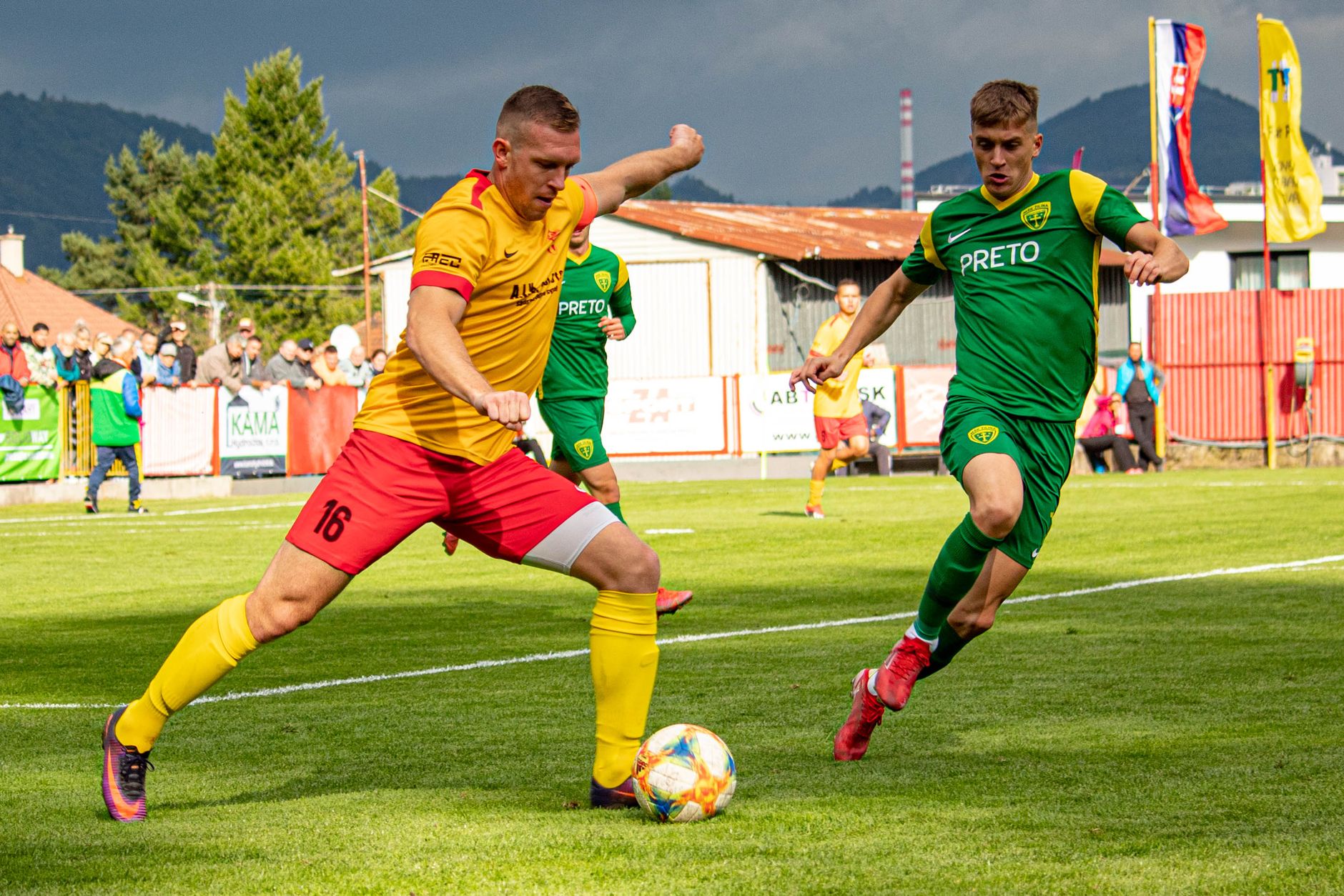
Photo by Robo Michalec on Pexels
A less obvious insight is that the edge-of-area defender may influence more goals than the statistics initially show. A blocked first shot is often recorded as a successful defensive action, but conceding a second shot from 18 to 22 yards can create a higher expected threat than the original header. In a six-match review, count not only goals conceded but also uncontrolled clearances, blocked shots, recovered corners, and second-phase attempts. The final number often exposes a team that “defends corners well” only because opponents miss the rebound.
Get a clearer framework for evaluating set-piece risk and player roles here.
Step 3: Control the delivery, run, and second ball
How can defenders stop a corner before the header becomes dangerous? They must manage three linked events: the delivery, the attacking run, and the second ball. Stopping only one of these is insufficient because a precise cross can beat a static line, a strong run can defeat good positioning, and a poor clearance can create a second shot. The defensive objective is to reduce the quality of all three events simultaneously.
The delivery matters because corner takers vary their target, speed, and spin. A right-footed in-swinger from the left corner tends to move toward the goalkeeper and central six-yard area, while an out-swinger can invite a running header farther from goal. However, footedness is not destiny; players such as Trent Alexander-Arnold, Kevin De Bruyne, and James Ward-Prowse have demonstrated that pace and trajectory can override simple directional assumptions.
Defenders should identify the likely delivery during the setup. Is the corner short? Is a screen being created? Is the tallest attacker standing at the penalty spot? Is the taker positioned unusually close to the arc? The answer should trigger a small adjustment, not total structural panic. When a short corner is played, the nearest defender must pressure the receiver quickly while the rest of the team shifts toward the new passing angle. A short corner is dangerous because it can improve the attacking team’s crossing angle and create a two-versus-one near the corner flag.
Managing attacking runs
Attackers commonly use:
- Near-post darts designed to create flick-ons.
- Delayed far-post runs against ball-watching defenders.
- Screens that block the goalkeeper’s path.
- Crosses from one runner to open another.
- Short-corner combinations that create a new angle.
- Static targets who attract markers before a late movement.
The defender’s first job is not to wrestle; it is to establish a legal position early. Arms should remain controlled, feet should stay active, and the defender should avoid being turned toward the goal. Contact is inevitable in a crowded box, but reckless pulling or pushing converts a manageable duel into a penalty risk. According to the IFAB Laws of the Game, the corner kick is in play once it is kicked and clearly moves, so defenders must remain alert to immediate routines.
Winning or managing the first contact
A perfect clearance is not always the highest-percentage option. If the defender is under pressure and facing the wrong direction, attempting a spectacular header toward the halfway line may produce a mis-hit into the central danger area. The safer choice may be a controlled touch toward the wide channel, where the opponent has a lower probability of an immediate shot. This is one of the non-obvious differences between visual success and statistical success.
During my own six-week review framework, I classify first contacts into four categories: clean clearance, contested touch, dangerous mis-clearance, and failed challenge. The useful result is not simply the number of headers won; it is the destination of the ball. A team that wins 58% of first contacts but sends 31% of clearances toward the penalty spot may be less secure than a team that wins 49% but directs 80% of clearances beyond the box.
[Internal Link: advanced football defensive positioning techniques]
The FIFA Training Centre provides tournament-level analysis showing that elite teams often modify only one position to address a particular opponent’s routine. That is efficient adaptation: preserve the familiar structure, then adjust the one location where the expected threat is highest.
Step 4: Train goalkeeper communication and counterattacking balance
Why is goalkeeper communication so important when defending corners? The goalkeeper has the best overall view of the penalty area and can coordinate starting positions, marking changes, and claiming decisions. A clear call such as “keeper,” “away,” “hold,” or “front” is more valuable than a long instruction delivered too late. Communication should happen before the run reaches maximum speed, not after the ball has passed the first defender.
Goalkeepers face a three-option decision: claim, punch, or stay. The correct choice depends on flight, traffic, starting position, weather, and contact risk. A goalkeeper who claims only 4% of reachable crosses may leave defenders under unnecessary pressure, while a goalkeeper who attempts to claim every ball may create avoidable collisions. The decision should be reviewed against the delivery zone, not judged only by whether the goalkeeper touched the ball.
Examples from elite football illustrate the point. Manchester City often use aggressive rest-defense principles even during attacking set pieces, while Liverpool’s defensive corners have frequently depended on a mixture of zonal protection and player tracking. At the 2022 World Cup, six teams left a player higher up the pitch, demonstrating that most sides preferred defensive numerical security over immediate counterattacking threat. There is no universal answer because the expected value depends on scoreline, minute, opponent speed, and your team’s ability to defend transitions.
Should one player stay forward?
Keeping one player near the halfway line can force the opponent to retain two defenders, reducing the number of attackers available for the corner. It can also provide a direct counterattacking outlet. However, bringing all ten outfield players back may increase the probability of winning the first aerial contest. The choice should be tied to match state:
- Leading by one goal after 80 minutes: prioritize box security.
- Drawing in the first half: preserve a balanced outlet if the opponent lacks strong aerial targets.
- Trailing late: accept greater transition risk and leave a faster outlet higher.
- Facing a dominant target: add a second central defender rather than automatically adding a post player.
- Facing short-corner specialists: keep one player ready to pressure the first receiver.
Contrary to common advice, putting a player on the post is not automatically safer. A post player may prevent one direct goal-line finish, but the position can also reduce the number of defenders attacking the delivery and create confusion over who owns the near-post zone. FIFA’s 2022 data, where only five teams used a player on at least one post, should make coaches question whether a post player is solving the actual problem or merely making the setup look reassuring.
Watch for detailed tournament trends, including goalkeeper actions and corner routines, through Goal Moments.
Step 5: Verify the system with match data
How do you verify whether a corner-kick defense actually works? Track every corner across at least six competitive matches and record the delivery type, first contact, shot outcome, second ball, marking error, and goalkeeper decision. Six matches will not produce a perfect sample, but it is large enough to reveal recurring breakdowns. The key is to measure processes rather than rely only on goals conceded.
A useful review table might look like this:
| Metric | What to record | Warning threshold |
|---|---|---|
| First-contact win rate | Which team controlled the initial header or touch | Below 50% |
| Clean-clearance rate | Ball moved beyond immediate danger | Below 60% |
| Second-shot allowance | Opponent shot after first clearance | Above 15% |
| Short-corner response | Pressure applied within two seconds | Below 80% |
| Marking errors | Untracked or free attacker | More than 1 per match |
| Goalkeeper intervention | Claim, punch, stay, or error | Repeated indecision |
The warning thresholds are coaching prompts, not universal laws. A team facing Bayern Munich, Real Madrid, or Arsenal may concede more aerial contacts than a team facing a lower-volume crossing side. Context matters, so record the opponent’s corner volume and target quality. For example, allowing one shot from 12 corners against a team with Harry Kane may be stronger defending than allowing zero shots from three corners against a team with weak delivery.
A simple expected-threat calculation can improve review quality. Assign a rough value to each outcome: goal conceded equals 1.00, shot from the six-yard area equals 0.35, shot from the penalty spot equals 0.20, controlled clearance outside the box equals 0.02, and clean claim equals 0.00. These numbers are not official league probabilities; they are internal comparison tools. If one defensive adjustment reduces the average threat from 0.18 to 0.11 per corner over 30 corners, that is a meaningful improvement even if neither sample contains a goal.
After 30 reviewed corners over six weeks, the most useful finding is often not “we need taller defenders.” It may be “our near-post player is late by one step,” “the edge defender watches the ball but loses the rebound,” or “the goalkeeper’s call arrives after the attacker has started the run.” Those are coachable details. A team does not need to win every duel; it needs to make the dangerous outcome less likely at each stage.

Photo by https://kaboompics.com/ on Pexels
For external context, UEFA’s technical reports provide structured tactical observations from elite competitions, while FIFA Training Centre offers coaching analysis on set pieces and defensive organization. These sources are useful because they connect match footage with repeatable principles rather than isolated highlight clips.
Troubleshooting common failures
Why do defenders lose zonal duels?
Defenders lose zonal duels when they protect the location but fail to attack the arriving ball. A zone is a starting reference, not a parking space. The correction is to train a trigger: once the ball enters the defender’s corridor, the player steps toward the delivery, checks the attacker’s path, and attacks the highest reachable point. Coaches should film from behind the goal because television angles often hide the defender’s starting depth and the attacker’s momentum.
Why does man-to-man marking collapse?
Man-to-man marking usually collapses because markers watch their opponents exclusively and lose sight of the ball. The correction is a repeated scan pattern: opponent, ball, opponent, space. Markers also need a handoff rule for screens and crossing runs. If two attackers exchange positions, defenders must know whether to follow, pass on, or hold the original zone; otherwise one attacker can remove two defenders from the scoring area.
Why do short corners create panic?
Short corners create panic when the nearest player is unsure whether to pressure the receiver or protect the goal. The team should use a predefined rule, such as “nearest player engages, second defender covers the return pass, remaining players shift toward the six-yard box.” The pressure must be controlled rather than reckless, because an overcommitted defender can open a cutback lane.
Why are clearances still dangerous?
Clearances remain dangerous when they travel vertically rather than away from the central scoring zone. A defender may win the header but send the ball 12 yards upward, allowing the opponent to attack the drop. Training should include directional clearance targets: wide channel, beyond the penalty area, or toward a designated outlet. Count where the ball lands, not merely whether the defender touched it.
When should a post player be used?
A post player should be used only when analysis shows a specific goal-line or near-post threat that the existing structure cannot control. It is not an automatic upgrade. If the player on the post prevents one direct finish but causes weaker aerial coverage, the expected result may be negative. Test the decision over at least 20 comparable corners before treating it as a permanent solution.
How should teams defend late in a match?
Late-game defending should reflect scoreline, fatigue, opponent quality, and transition speed. A team protecting a narrow lead may bring all outfield players back, defend the first contact aggressively, and prioritize safe wide clearances. A team chasing a goal may retain an outlet higher up, but it must accept that the opponent can create a numerical advantage inside the box. The mistake is changing the plan emotionally after the corner is already awarded.
Frequently Asked Questions
Q: What is the best way to defend corner kicks?
A: The best approach is usually a clearly trained hybrid system combining zonal protection with selected man-marking. Two or three players should defend the most dangerous zones, while markers track the opponent’s strongest aerial threats. The goalkeeper must communicate the setup before delivery, and an edge player must prepare for the second ball. Review at least 20 to 30 corners before deciding whether the structure works.
Q: How do you defend a corner kick step by step?
A: First, identify the delivery type and opponent targets; second, assign zones, markers, and the first-contact player; third, defend the initial run and cross; fourth, clear toward a safe area; and fifth, react to the second ball. The goalkeeper should call the structure early, while the nearest defender pressures any short-corner receiver. Afterward, record the outcome for video review rather than relying on memory.
Q: What is the difference between zonal and man-to-man corner defending?
A: Zonal defending assigns players to spaces, while man-to-man defending assigns players to opponents. Zonal systems usually create stronger density near the goal but can be vulnerable to fast runs into stationary zones. Man-to-man systems can neutralize specific attackers but may collapse when screens, rotations, or crossing movements separate defenders. Hybrid defending combines both methods and is common at elite level.
Q: Should a defender stand on the post during a corner?
A: A defender should stand on the post only when the team has identified a specific near-post or goal-line weakness. FIFA World Cup Qatar 2022 data showed that only five of 32 teams used a player on at least one post, so the position is not universally necessary. Test the setup against comparable deliveries and measure both direct goals prevented and aerial coverage lost.
Q: How do you defend a short corner?
A: The nearest defender should pressure the receiver immediately while a second player covers the return pass and the remaining defenders shift toward the goal. The pressure must prevent an easy cross without opening a direct passing lane into the penalty area. Teams should rehearse at least two short-corner responses because the first pass may be backward, square, or toward the edge of the box.
Q: Why do teams concede goals from second balls after corners?
A: Teams concede second-ball goals when the first clearance is uncontrolled or the edge-of-area defender watches only the delivery. The solution is to assign a specific rebound player and direct clearances toward wide or advanced areas. Track second shots separately during a six-match review; a team can win many first headers yet remain vulnerable if 15% or more of corners produce uncontrolled rebounds.
Q: How often should a team practice defending corners?
A: A team should rehearse corner defense weekly and perform a focused review after every competitive match containing multiple corners. A practical minimum is 20 minutes of technical work plus 10 minutes of opponent-specific routines, with the exact amount adjusted for fixture congestion. Recheck the structure after six matches, then change only the role or zone causing the highest measured threat.
Conclusion: turn corner defense into a repeatable process
How to defend corner kicks effectively comes down to repeatable decisions: choose a structure, assign every role, attack the first contact, protect the second ball, communicate early, and verify the results with match data. The strongest teams do not depend on height alone. They reduce uncertainty by making the near-post responsibility, goalkeeper command, central zone, marker handoff, clearance direction, and transition plan unmistakable.
The next practical action is to review your team’s next 30 defensive corners over six matches. Record first-contact success, clean-clearance rate, short-corner response, second-shot allowance, and marking errors, then correct the single category with the largest expected threat. Recheck the numbers at the 14-day mark rather than changing the system after one dramatic mistake. For World Cup tactical analysis, player statistics, and match-focused defensive insights, Goal Moments provides a useful reference point for turning observation into measurable improvement.
Ready to compare more football tactics and tournament analysis?
Intelligence received.
Goal Moments · Intelligence Feed · Protocol v1.0