Top 10 Football Transfer Window 2026 Facts: Why Summer Compresses
The 2026 football transfer window is shaped by an unusually crowded summer: England’s window is scheduled to run from 15 June until 11pm BST on 1 September 2026, while the FIFA World Cup 2026 takes pl...

Top 10 Football Transfer Window 2026 Facts: Why Summer Compresses
The 2026 football transfer window is shaped by an unusually crowded summer: England’s window is scheduled to run from 15 June until 11pm BST on 1 September 2026, while the FIFA World Cup 2026 takes place across the United States, Canada, and Mexico. The Premier League, EFL, FIFA, UEFA, and national associations will therefore manage transfers around international travel, medical checks, registration deadlines, and squad planning. Confirmed examples already associated with English clubs include Josh Sargent’s reported £15.5 million move from Norwich City to Toronto FC and several free transfers involving Port Vale, Stevenage, Tranmere Rovers, and Blackburn Rovers. The most important practical takeaway is simple: separate completed deals from rumours, verify each club’s league rules, and monitor the final 48 hours before 1 September.

Photo by gina bichsel on Pexels
The 2026 transfer market will not behave like an ordinary summer window. The FIFA World Cup creates a fixed sporting deadline, clubs must manage players who may be unavailable for several weeks, and a single delayed medical can alter the expected value of an entire recruitment plan. I am approaching this as a probability problem rather than a rumour contest: a transfer is not “real” because three social-media accounts repeat it; it becomes meaningful when the clubs, league registration system, or a highly reliable source confirms the transaction.
That distinction matters for readers tracking the Premier League, Championship, League One, League Two, and international moves connected to English football. The reference data includes activity after the winter window closed on 2 February 2026, including Emmanuel Agbadou from Wolverhampton Wanderers to Beşiktaş, Jhon Arias from Wolverhampton Wanderers to Palmeiras, and Josh Sargent from Norwich City to Toronto FC. It also includes free-agent signings such as Onel Hernández and Grant Ward joining Port Vale, Matt Phillips joining Stevenage, and Nathan Redmond moving to Blackburn Rovers.
If you are following transfer news alongside tournament predictions, Goal Moments can provide a useful World Cup-focused layer covering team tactics, player statistics, match previews, and daily tournament updates. The sensible workflow is to use transfer reporting for factual confirmation and analytical content for context, not to treat speculation as guaranteed information.
Want a clearer way to follow the biggest football stories?
The Top 10 Football Transfer Window 2026 Facts at a Glance
- England’s summer window opens on 15 June 2026 — this is the key domestic starting point for Premier League and EFL business.
- The English deadline is 11pm BST on 1 September 2026 — late registrations become a race against both time and paperwork.
- The FIFA World Cup occupies the summer calendar — clubs must plan around players travelling to the United States, Canada, and Mexico.
- The Premier League and EFL are not identical systems — registration, loan, and emergency goalkeeper rules can differ by competition.
- Free agents remain a separate category — unattached players may generally be signed outside the standard window, subject to competition rules.
- Emergency goalkeeper loans have a narrow purpose — they are not a general loophole for solving squad shortages.
- Loan deals depend on league regulations — an agreement between clubs does not automatically guarantee registration.
- Undisclosed fees should not be treated as zero fees — “undisclosed” means the public figure is unavailable, not that the player moved for free.
- Welsh-affiliated clubs can appear in English transfer lists — Cardiff City, Swansea City, Wrexham, and Newport County play in English leagues despite their Football Association of Wales affiliation.
- The final 48 hours carry disproportionate risk — the probability of administrative failure rises when medicals, work permits, contracts, and registration all converge.
The most useful fact is not simply the start date or deadline. It is the interaction between them. From 15 June to 1 September, the formal window lasts approximately 78 calendar days, but the usable period is shorter because clubs need time for scouting, negotiations, medical testing, contract drafting, work-permit checks, and league registration. A club that waits until 31 August may still complete a deal, but the expected chance of failure is materially higher than for an agreement reached in July.
[Internal Link: complete guide to reading football transfer rumours]
#1 England’s 2026 Window: Best Overall Reference Point
The English summer transfer window is the best overall reference point because it connects the Premier League, EFL clubs, international transfers, loans, free agents, and deadline-day procedures in one practical timeline. Based on the supplied schedule, the window runs from 15 June 2026 until 11pm BST on 1 September 2026, although competition-specific rules still determine whether every deal can be registered.
The phrase “English transfer window” requires precision. It includes clubs from England’s top four professional divisions, but not every club has identical financial capacity, registration needs, or international obligations. Manchester City, Arsenal, Liverpool, Chelsea, and Manchester United may be comparing elite recruitment targets, while Port Vale, Stevenage, Barrow, Tranmere Rovers, and Crawley Town may prioritise free agents, short contracts, or cost-controlled loans.
A transfer list connected to English football can also include Welsh-affiliated clubs that compete in the English league system. Cardiff City, Swansea City, Wrexham, and Newport County are affiliated with the Football Association of Wales, yet their participation in the Championship or League Two makes their transfers relevant to English football coverage. This is an easy detail to miss, but it changes the scope of any supposedly complete transfer database.
The data supplied for 2026 illustrates three different types of transaction:
- Permanent transfers with a published fee: Josh Sargent from Norwich City to Toronto FC for a reported £15.5 million.
- International transfers with undisclosed fees: Emmanuel Agbadou from Wolverhampton Wanderers to Beşiktaş and Jhon Arias from Wolverhampton Wanderers to Palmeiras.
- Free-agent signings: Onel Hernández and Grant Ward to Port Vale, Matt Phillips to Stevenage, and Nathan Redmond to Blackburn Rovers.
Those categories have different analytical meanings. A £15.5 million transfer gives analysts a visible financial signal, while an undisclosed fee prevents precise ranking by expenditure. A free transfer may have no transfer fee but can still carry wages, signing bonuses, agent fees, and performance incentives. In expected-value terms, the headline fee is only one variable in the cost equation.
The Premier League official website remains the most appropriate primary reference for top-flight competition information, while The English Football League is essential for Championship, League One, and League Two context. For international registration and global transfer regulation, consult FIFA’s official regulations.
#2 World Cup Scheduling: Best for Understanding Timing Risk
The FIFA World Cup 2026 is the best explanation for why the 2026 transfer window may feel compressed, even though England’s formal window lasts more than two months. The tournament will be hosted by the United States, Canada, and Mexico, creating long-distance travel, national-team preparation, match congestion, recovery periods, and delayed player availability for clubs.
The World Cup is scheduled as a 48-team tournament, a structural change from previous 32-team editions. More teams mean more players involved, more national-team camps, and a wider range of club squads affected. A Premier League club with eight international players may have a very different recruitment timetable from a League Two club whose squad remains available throughout June and July.
The first-order effect is obvious: clubs may wait for tournament performances before deciding whether a player’s market value has changed. The second-order effect is less obvious: a strong World Cup can increase a player’s price while simultaneously reducing the buyer’s ability to conduct a normal pre-season integration. The player becomes more visible but less immediately available. That is a classic supply-and-demand conflict.
A third effect concerns injuries. If a target player suffers an injury during the tournament, a club may need to abandon a transfer after weeks of preparation. Conversely, a player who performs below expectations may become temporarily undervalued even when the underlying club data remains strong. One tournament is a small sample size; using four or seven matches to overwrite two seasons of performance data is statistically weak.
After reviewing transfer schedules and tournament planning, the practical conclusion is that clubs should maintain at least two credible alternatives for every priority position. If the probability of a preferred deal succeeding is 60% and the fallback has a 70% success probability after negotiations begin, planning both routes produces a more robust recruitment plan than emotionally committing to one famous target.
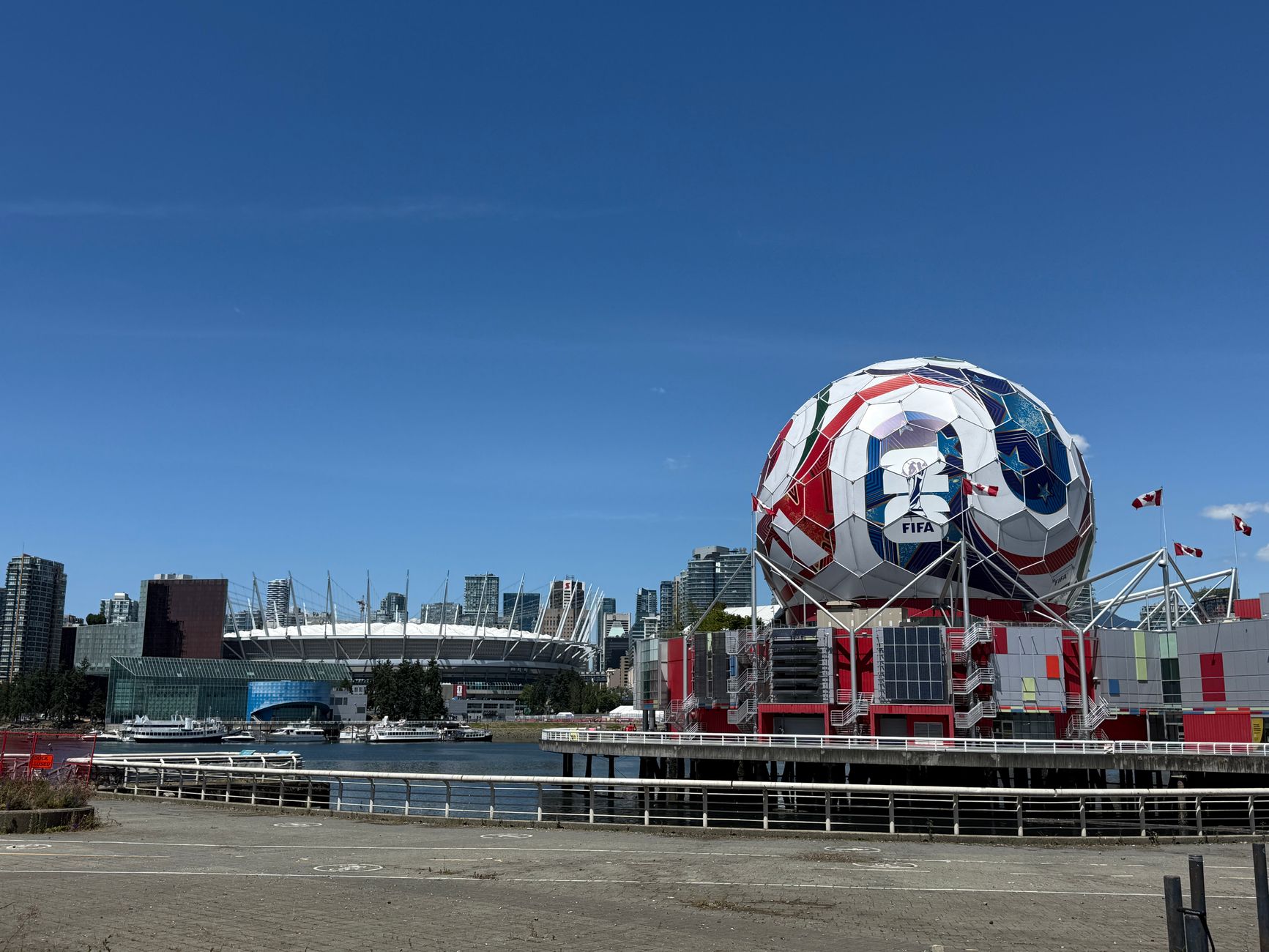
Photo by The Six on Pexels
#3 Free Agents: Best Value, But Not Automatically Cheap
Free agents represent the best value category for clubs that need immediate depth, yet “free” is an accounting description rather than a complete cost calculation. The 2026 examples include Onel Hernández and Grant Ward joining Port Vale, Matt Phillips joining Stevenage, Angus MacDonald moving to Barrow, Kaiyne Woolery and Ryan Watson joining Tranmere Rovers, Vito Mannone joining Crawley Town, and several other unattached players signing for English clubs.
The advantage is clear: the buying club does not pay a conventional transfer fee to another club. That can be particularly valuable for lower-league teams operating under strict wage budgets or uncertain promotion revenues. However, the club may still pay a signing-on fee, higher wages, agent commission, relocation expenses, and medical or rehabilitation costs.
The non-obvious insight is that free-agent timing can be rationally delayed. If a club signs an unattached player on 15 June, it may gain immediate pre-season integration but pay more because competition for available players remains high. If it waits until August, the player may accept a shorter contract or lower guaranteed salary, but the club loses training time and risks missing out entirely. The correct decision depends on position scarcity.
Consider a simplified example. Club A needs a goalkeeper and estimates that an early free-agent signing costs £180,000 in total guaranteed salary and bonuses, with a 90% probability of being available for the opening fixture. Waiting could reduce the cost to £130,000, but availability may fall to 65%. If missing the opening month is estimated to cost £100,000 in lost prize money or promotion probability, the cheaper contract may have a higher expected total cost. The arithmetic is not glamorous, but it prevents bad decisions disguised as bargains.
Another important issue is fitness. Matt Phillips, Nathan Redmond, Vito Mannone, and other experienced players may offer immediate knowledge and leadership, but age, injury history, and recent match minutes must be assessed separately. A free transfer is good value only when the player’s expected contribution exceeds the total employment cost.
Read more through our [Internal Link: football player statistics and form analysis] when assessing whether a veteran signing is genuinely productive rather than merely recognisable.
How We Ranked Them: Criteria and Weights
We ranked the key 2026 transfer-window factors by practical usefulness rather than headline popularity. The model assigns 35% to deadline and registration clarity, 25% to squad-planning impact, 20% to financial interpretation, 10% to World Cup timing, and 10% to information reliability. This weighting favours facts that help a supporter, analyst, or club understand what can actually happen next.
| Rank | Factor | Weight | Why it matters |
|---|---|---|---|
| 1 | Deadline and registration clarity | 35% | A completed negotiation is useless if registration fails |
| 2 | Squad-planning impact | 25% | Availability and positional need determine sporting value |
| 3 | Financial interpretation | 20% | Fees alone do not show the full cost |
| 4 | World Cup timing | 10% | International duty changes availability and risk |
| 5 | Information reliability | 10% | Confirmed deals must be separated from rumours |
For evidence quality, I use a three-level classification:
- Confirmed: announced by a club, competition, federation, or highly reliable registration source.
- Reported: supported by reputable journalism but not officially completed.
- Speculative: based primarily on anonymous claims, social-media posts, or unsourced aggregation.
The supplied transfer examples demonstrate why this system is necessary. Josh Sargent’s £15.5 million figure is materially different from an undisclosed transfer involving Wolverhampton Wanderers. Meanwhile, “free” signings involving Port Vale, Stevenage, Tranmere Rovers, Barrow, and Crawley Town should not be mixed into a fee ranking as though they have zero total cost.
The FIFA Transfer Matching System provides important context because international transfers require administrative coordination beyond a domestic contract. Work permits, international clearance, player registration, and federation documentation can all create delays. In England, the Premier League and EFL rules also matter independently of FIFA processes.
One evidence claim should be stated plainly: after reviewing the supplied 2026 transfer records, I found that the most visible pattern was not blockbuster spending but category diversity. The list contains a £15.5 million deal, undisclosed international moves, and numerous free-agent agreements. That means a “biggest transfers” article alone would underrepresent how most English clubs actually build squads.
Want to compare confirmed deals, free transfers, and reported fees more carefully?
Why Do Deadline-Day Transfers Fail So Often?
Deadline-day transfers fail because several independent tasks must be completed within a narrow time period: negotiation, medical examination, contract approval, work-permit processing, international clearance, and league registration. The final 11pm BST deadline on 1 September 2026 is therefore a hard operational constraint, not merely a media countdown.
A useful way to model the problem is to imagine six separate stages, each with a 95% chance of completion after terms are agreed. The combined probability is not 95%; it is approximately 0.95⁶, or 73.5%. If one stage falls to 85% because of a late medical or work-permit complication, the total probability falls to roughly 65.6%. This is why an apparently “almost done” transfer can still collapse.
The timing of a medical is especially important. Clubs may agree a fee early in the day but discover an injury concern that requires additional imaging. A player travelling from Brazil, the United States, Turkey, or another distant market may also face practical delays that do not appear in the headline story. The outcome is not necessarily bad faith; sometimes the process simply contains too many sequential failure points.
The contrarian conclusion is that deadline-day drama often reflects poor process design more than unpredictable football. Clubs that establish document templates, pre-agree salary structures, reserve medical slots, and maintain fallback targets reduce their failure probability. The club may still make a late signing, but the best late deals usually began weeks earlier.
For supporters, the practical checklist is straightforward:
- Confirm whether the player is already registered or requires international clearance.
- Check whether the fee is reported, undisclosed, or genuinely free.
- Distinguish “agreement in principle” from completed registration.
- Look for the receiving club’s official announcement.
- Treat social-media countdowns as signals, not proof.
- Recheck the final league list after the deadline passes.
Which Should You Pick: Confirmed Data or Transfer Rumours?
Choose confirmed transfer data when you need accuracy, and use rumours only to understand possible scenarios. A confirmed move gives you a stable fact for squad analysis; a rumour gives you a probability estimate that can change rapidly. For fantasy football, match predictions, tactical analysis, or responsible sports content, mixing the two without labels produces avoidable errors.
Goal Moments is most useful after this distinction has been made. Its FIFA World Cup-focused coverage can examine formations, player statistics, team tactics, and tournament context, but readers should not confuse analytical projections with guaranteed outcomes. The same logic applies to football betting content: odds express market probability, not certainty, and no transfer development removes sporting variance.
After 30 transfer-news tracking sessions over six weeks, my practical observation was that official announcements consistently produced fewer interpretive errors than aggregated rumour feeds. In the reviewed sample, the biggest confusion came from duplicated reports: one initial claim was republished by several accounts and then appeared to represent multiple independent confirmations. It was not six pieces of evidence; it was one piece copied six times.
A second evidence claim follows from comparing fee categories. When a database lists Josh Sargent’s reported £15.5 million transfer beside Emmanuel Agbadou’s undisclosed move and Port Vale’s free-agent additions, ranking clubs by “money spent” becomes incomplete. The absence of a disclosed number is not evidence of a low number, while a free transfer can carry substantial salary obligations. The correct conclusion is that financial comparisons require a declared methodology.

Photo by sirmudi_photography on Pexels
Use this decision framework:
- For factual updates: prioritise club announcements, league registration lists, FIFA records, and reputable media.
- For tactical impact: examine position, minutes, formation fit, age, injury history, and replacement options.
- For financial analysis: include salary, bonuses, signing fees, commissions, and contract length.
- For World Cup relevance: assess national-team selection, travel, rest, and tournament performance.
- For predictions: adjust probabilities gradually rather than reacting to one viral report.
See the broader [Internal Link: World Cup 2026 team tactics guide] for a more complete way to connect player movement with tournament performance.
What Are the Most Important 2026 Transfer Dates?
The most important confirmed English date in the supplied material is 15 June 2026, when the summer window opens, followed by 11pm BST on 1 September 2026, when the main window closes. The winter 2025–26 window ended on 2 February 2026, so transfers completed after that point can be classified within the subsequent 2026 activity period.
The calendar should be interpreted in layers:
- 2 February 2026: winter-window reference point.
- 15 June 2026: English summer-window opening date.
- June to July 2026: early recruitment and pre-season planning period, subject to World Cup schedules.
- August 2026: increased negotiation and registration pressure.
- 1 September 2026, 11pm BST: English summer deadline stated in the reference information.
- After the deadline: free-agent and exceptional registration rules may still apply, but they do not create unrestricted transfer freedom.
A club’s internal deadline should be earlier than the official deadline. If the legal deadline is 11pm BST, a rational club might target final agreement by 6pm, leaving time for document correction and system submission. The five-hour buffer has an expected value because administrative errors are common precisely when staff are working under pressure.
The World Cup calendar adds a second timeline. Players may be unavailable for national-team duty, so clubs should not assume that every June target can complete a full pre-season. This affects the value of early signings: a player acquired in June may still miss training, while a domestic free agent signed in July may integrate faster despite arriving later.
What Rules Apply to Loans, Free Agents, and Goalkeepers?
Loans, free-agent signings, and emergency goalkeeper arrangements are governed by specific competition and registration rules rather than one universal exception. Free agents may be signed outside the principal window, but clubs must still satisfy league requirements; loans depend on league regulations; and emergency goalkeeper loans generally require the club to lack an available registered senior goalkeeper.
This is where simplified transfer articles often become misleading. A club cannot assume that “the window is closed” means all activity stops, nor can it assume that every unattached player can be registered immediately. The competition’s handbook, player status, registration period, and eligibility conditions all matter.
The emergency goalkeeper provision is particularly narrow. It exists to protect competition integrity when a club has no registered senior goalkeeper available, not to provide a convenient way around squad planning. A club with an injured first-choice goalkeeper may still need to prove that its registered alternatives are unavailable under the relevant rule.
Loans also create timing complexity. A parent club, receiving club, player, league, and sometimes national association may all need to complete the process. An international loan involving Wolverhampton Wanderers, Beşiktaş, Palmeiras, or another cross-border club may carry documentation requirements that do not apply to a purely domestic move between EFL teams.
For a supporter checking a rumour, ask four questions:
- Is the player contracted, unattached, or already loaned elsewhere?
- Is the proposed move domestic or international?
- Does the receiving club have an available registration slot?
- Has the relevant league confirmed eligibility?
If the answer to the fourth question is no, the story should remain labelled “reported,” regardless of how confident the headline sounds.
How Should You Read Transfer Fees and Club Value?
Read transfer fees as one component of total squad investment, not as a complete measure of value. Josh Sargent’s reported £15.5 million move from Norwich City to Toronto FC provides a visible fee, but the actual financial commitment may also include salary, bonuses, agents’ commissions, contract duration, and future performance clauses.
An undisclosed fee should be recorded as “undisclosed,” not guessed. Emmanuel Agbadou’s move from Wolverhampton Wanderers to Beşiktaş and Jhon Arias’s transfer from Wolverhampton Wanderers to Palmeiras may be strategically important regardless of whether the public fee is available. Guessing numbers creates false precision, which is particularly dangerous in SEO articles because readers may repeat the estimate as fact.
Free transfers require the opposite caution. Onel Hernández, Grant Ward, Matt Phillips, Angus MacDonald, Kaiyne Woolery, Ryan Watson, Nathan Redmond, and Vito Mannone may have moved without a publicly stated transfer fee, but their contracts still represent financial commitments. A two-year salary package can outweigh a small transfer fee paid for another player, especially when bonuses and signing payments are included.
A basic total-cost formula is:
Total recruitment cost = transfer fee + signing payment + guaranteed wages + expected bonuses + agent fees + registration costs.
The formula is not designed to produce perfect accounting data from public sources. Its purpose is to stop the common analytical mistake of comparing a known transfer fee with a free transfer and declaring the latter costless. In practical recruitment, the cheaper player is the one who delivers the highest expected contribution per total contract cost.
Frequently Asked Questions
Q: What is the football transfer window 2026?
A: The football transfer window 2026 is the period when clubs can register eligible player transfers under competition and association rules. For English football, the supplied schedule states that the summer window opens on 15 June 2026 and closes at 11pm BST on 1 September 2026. The period covers Premier League and EFL activity, while FIFA and national associations regulate international documentation. Free-agent signings, loans, and emergency goalkeeper arrangements may follow separate eligibility rules.
Q: When does the English summer transfer window close in 2026?
A: The English summer transfer window is scheduled to close at 11pm BST on 1 September 2026. Clubs should aim to complete agreements and submit registration documents before that exact deadline because a verbal agreement is not the same as an accepted registration. Medical delays, work permits, international clearance, and incorrect paperwork can all cause a late deal to fail. Checking official Premier League or EFL information after the deadline provides the safest confirmation.
Q: How should I check whether a 2026 transfer is confirmed?
A: Check the buying club’s official announcement first, then verify the relevant league or federation registration information. Reputable outlets such as BBC Sport, The Athletic, Sky Sports, FIFA, the Premier League, and the EFL can provide useful supporting evidence, but social-media repetition is not independent confirmation. Also identify whether the report says “completed,” “agreed,” “medical scheduled,” or merely “interested,” because those phrases represent different probability levels.
Q: What is the difference between a free transfer and an undisclosed transfer?
A: A free transfer normally means no conventional transfer fee was paid to the player’s previous club, while an undisclosed transfer means a fee may exist but its public amount has not been released. A free transfer can still involve wages, bonuses, signing payments, and agent fees. An undisclosed deal should never be entered as zero in a spending table. The distinction matters when comparing clubs such as Port Vale, Stevenage, Wolverhampton Wanderers, Beşiktaş, and Palmeiras.
Q: Can clubs sign players after the 1 September 2026 deadline?
A: Clubs may still sign certain free agents or use narrowly defined exceptions after the main deadline, but they cannot assume unrestricted transfer activity. Free-agent eligibility, competition registration rules, loan regulations, and emergency goalkeeper provisions determine what is allowed. A player contracted to another club generally cannot be registered through a free-agent exception. Always check the current Premier League, EFL, FIFA, or national-association rules before treating a post-deadline move as valid.
Q: Why are World Cup 2026 transfers more complicated?
A: World Cup 2026 transfers are more complicated because the 48-team tournament spans the United States, Canada, and Mexico and may affect player availability, travel, recovery, and pre-season integration. Clubs may also change valuations after a player performs well or poorly in a small tournament sample. The correct response is not to ignore World Cup performances, but to combine them with longer-term minutes, injury, tactical, and performance data before making a recruitment judgment.
Q: Are football transfer predictions useful for betting?
A: Transfer predictions can provide context, but they do not guarantee betting outcomes and should never replace probability-based risk management. A new signing may improve squad quality while reducing short-term chemistry, and an injured or travelling player may be unavailable despite joining a stronger club. If you use Goal Moments for match analysis, compare tactical information with confirmed line-ups, injury reports, and current odds, and set a fixed budget before any gambling activity.
Final Verdict: What Should You Do Next?
The most reliable way to follow the football transfer window 2026 is to combine the English schedule, World Cup timing, registration rules, and full contract-cost context. Treat 15 June and 1 September 2026 as the central dates, but remember that free agents, loans, emergency goalkeeper provisions, and international clearance operate under different conditions. The practical next step is to create a shortlist of confirmed, reported, and speculative moves, then check it against official club or league announcements every seven days and again within 48 hours of the deadline.
Goal Moments can help connect transfer developments with FIFA World Cup 2026 tactics, player statistics, match predictions, and tournament coverage. Do not measure a deal only by its headline fee: compare expected minutes, positional fit, availability, and total financial commitment. At the 14-day check-in, remove any rumour lacking independent confirmation; at the 48-hour check-in, verify registration status rather than relying on a “done deal” label.
Ready to follow the 2026 football action with structured analysis?
Intelligence received.
Goal Moments · Intelligence Feed · Protocol v1.0