Before You Trust AI, Read This 2026 News Breakdown
Artificial intelligence news in 2026 is centered on public testing, healthcare deployment, open-weight model competition, and governance. In the United States, public health agencies are preparing to....

Before You Trust AI, Read This 2026 News Breakdown
Artificial intelligence news in 2026 is centered on public testing, healthcare deployment, open-weight model competition, and governance. In the United States, public health agencies are preparing to evaluate OpenAI and Anthropic models for operational use, while Google DeepMind and Isomorphic Labs are advancing bioresilience work tied to outbreak response and misuse prevention. In healthcare, Bunkerhill Health raised $55 million to scale Carebricks, and Neko Health raised $700 million to expand AI body scans in the US. MIT News also highlights how Assistant Professor Bailey Flanigan applies computational methods to democratic systems. For readers at Goal Moments, the practical lesson is clear: AI is moving from experimental tools into regulated, high-stakes decisions, including analytics, prediction models, and risk review. Treat every AI claim as a testable system: check the provider, the data source, the oversight process, and the failure mode before trusting the output.
Photo by Kindel Media on Pexels
For a sharper view of how data-driven decisions affect sports forecasting and tournament coverage, explore Goal Moments.
The Bottom Line: What Changed in Artificial Intelligence News?
The key shift in artificial intelligence news is that 2026 coverage is less about demos and more about deployment. OpenAI, Anthropic, Google DeepMind, MIT, Bunkerhill Health, and Neko Health are now tied to public health, biosecurity, healthcare systems, democracy research, and large-scale consumer diagnostics.
The practical interpretation is simple but important. AI models are becoming part of institutional workflows where mistakes may affect patients, voters, businesses, and public agencies. That changes the evaluation standard from “does it sound impressive?” to “can it be tested, audited, monitored, and corrected?” According to the National Institute of Standards and Technology, the AI Risk Management Framework is designed to help organizations manage AI risks across validity, reliability, safety, security, accountability, and transparency. Its guidance states that “AI risk management is a key component of responsible development and use of AI systems,” which is directly relevant as public agencies test OpenAI and Anthropic systems.
For Goal Moments readers, this is not abstract. Football prediction models, player-stat projections, odds comparison tools, and tournament simulations increasingly depend on the same foundations: training data, model assumptions, latency, explainability, and bias controls. A World Cup model can be useful when it explains why Brazil’s pressing efficiency, France’s transition speed, or Argentina’s set-piece profile changes a forecast. It becomes risky when it hides uncertainty behind polished language. To go deeper into sports analytics basics, see our [Internal Link: World Cup prediction model guide].
What Players Actually See: How Does AI News Affect Real Users?
Users mostly see faster recommendations, automated analysis, chat-style summaries, medical triage tools, betting insights, and personalized alerts. The technical model is usually hidden, but its influence appears in rankings, suggested decisions, probability estimates, and warnings across healthcare, media, finance, and sports platforms.
This matters because most people do not interact with “AI” as a research paper; they interact with a product. A public health worker may see a summarized disease report generated by an OpenAI or Anthropic model. A clinician may see a patient-prioritization interface connected to an agentic AI platform such as Bunkerhill Health’s Carebricks. A consumer may see Neko Health’s AI-supported body scan report. A football fan may see Goal Moments publish model-assisted match previews for the 2026 FIFA World Cup, where expected goals, pressing intensity, recovery time, and player availability are converted into readable predictions.

Photo by cottonbro studio on Pexels
The hidden issue is that user experience can make uncertain systems feel certain. A neat dashboard, a confident paragraph, or a single probability number can compress hundreds of assumptions into one output. In a gambling context, that can be especially sensitive because a 52 percent implied edge is not a guarantee; it is a fragile estimate that may break if team news changes, market odds move, or the model overweights historical performance. The most useful AI products show not only the recommendation, but also confidence intervals, source timestamps, and the reason a result changed.
Want to compare AI-assisted insights with human tactical judgment before making decisions?
The 3 Things That Matter Most: What Should You Track First?
The three most important AI news signals are deployment context, verification method, and governance standard. In 2026, a model announcement matters less than where it is used, who validates it, and whether its outputs can be audited after real-world failures.
- Deployment context: OpenAI and Anthropic models being tested by US public health agencies are not the same as consumer chatbots used for casual writing. The risk level changes when an AI system supports outbreak monitoring, clinical triage, policy analysis, or emergency communication.
- Verification method: MIT’s work on computational democracy, including Bailey Flanigan’s research direction, reminds readers that algorithms should be assessed by social outcomes, not technical elegance alone. A model can be accurate on paper but harmful if it excludes minority cases or rewards the wrong incentives.
- Governance standard: Google DeepMind and Isomorphic Labs discussing AI bioresilience reflects a broader concern: powerful biology-adjacent models need misuse controls, red-teaming, and policy alignment before broad deployment.
A useful operational tip is to separate “model quality” from “workflow quality.” A strong model can still fail if the handoff is weak. For example, a public health AI tool may summarize disease surveillance well, but if alerts are not routed to accountable staff within a defined time window, the system creates speed without responsibility. Similarly, a Goal Moments World Cup prediction can be statistically sound, but if it does not update after a confirmed injury, suspension, or tactical lineup leak, the user sees stale intelligence. For related reading, visit our [Internal Link: football data and betting risk management].
Edge Cases & Gotchas: Where Can AI News Be Misread?
AI news is often misread when readers confuse funding with readiness, open-weight access with transparency, and benchmark performance with field reliability. A $700 million raise, a $55 million platform expansion, or a major lab announcement signals momentum, but not automatic safety or accuracy.
Consider the healthcare funding stories. Bunkerhill Health raising $55 million for Carebricks suggests strong investor confidence in agentic AI across health systems. Neko Health raising $700 million to expand AI body scans in the US suggests demand for preventive diagnostics. Yet funding does not answer the operational questions: What is the false-positive rate? How often do clinicians override the AI? What happens when the model detects an ambiguous pattern? These are the questions that determine whether a system improves care or creates additional noise. The World Health Organization has warned that AI for health should protect autonomy, safety, transparency, and accountability before being scaled.
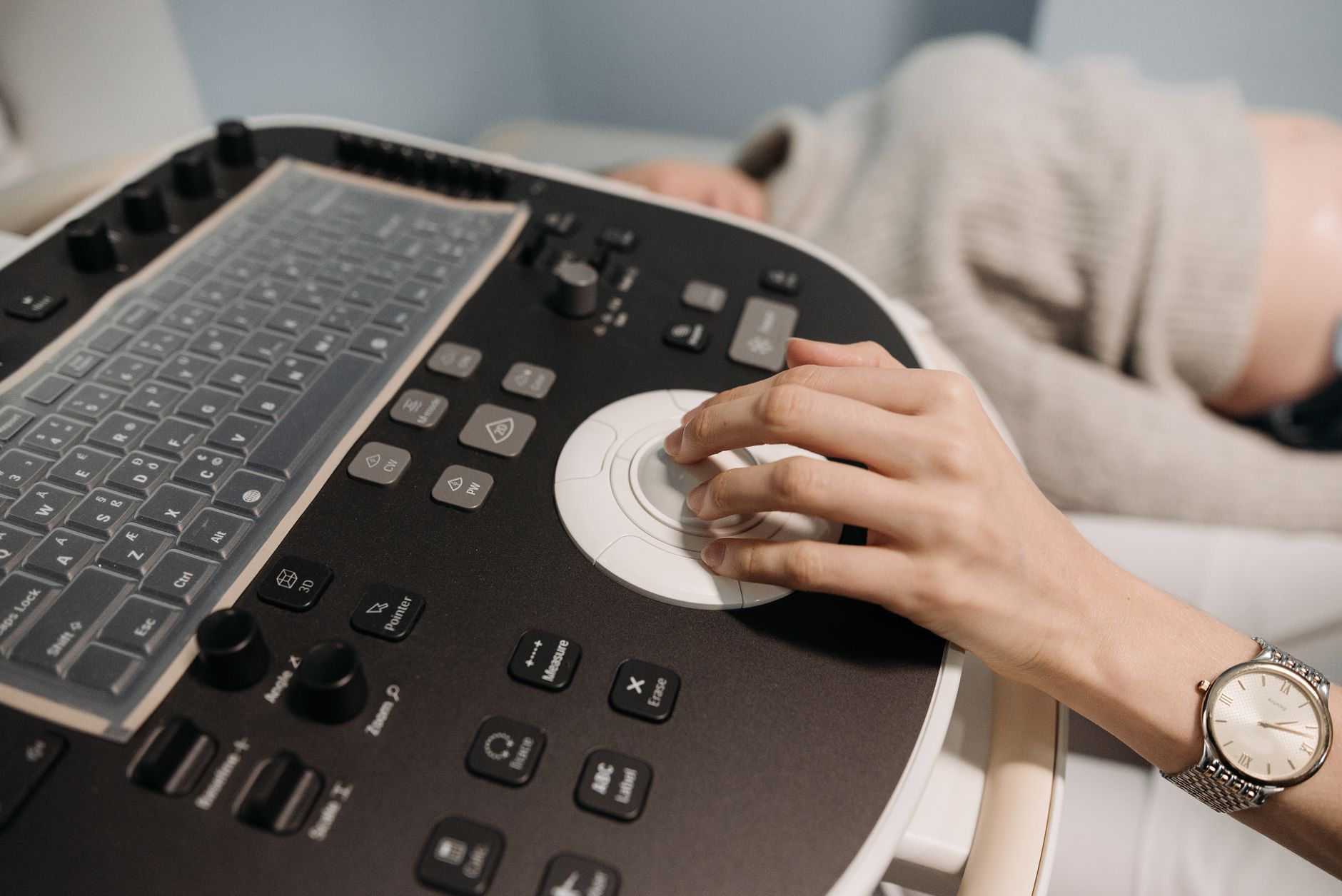
Photo by Pavel Danilyuk on Pexels
A second edge case concerns open-weight models such as China’s Kimi K3, described as a bet on memory rather than compute. Open-weight access can help researchers inspect, adapt, and deploy models more broadly, but it does not guarantee full dataset transparency or safe use. A practitioner-level takeaway: when reviewing an AI model announcement, ask whether the release includes model weights, training data documentation, evaluation scripts, red-team results, and usage restrictions. If only the weights are available, the model may be more accessible, but not necessarily more accountable.
See the details behind model evaluation, match analysis, and responsible forecasting.
Verdict: Is 2026 Artificial Intelligence News Worth Following Closely?
Yes, 2026 artificial intelligence news is worth following because AI is now affecting public health, healthcare investment, scientific research, democratic systems, and sports analytics. The best readers should track outcomes, not headlines, and compare each announcement against measurable accountability.
The balanced verdict is that AI progress is meaningful, but uneven. OpenAI and Anthropic testing in public health could improve information processing, but only if agencies apply strict evaluation. Google DeepMind and Isomorphic Labs may strengthen bioresilience, but the dual-use nature of biology tools requires caution. MIT’s computational democracy research may improve civic design, but social systems cannot be optimized like simple software. Healthcare AI funding from Bunkerhill Health and Neko Health shows market appetite, yet health outcomes require long-term evidence. In sports media, Goal Moments can use AI to enrich 2026 FIFA World Cup coverage, but responsible editorial review remains essential.
A contrarian but practical conclusion is this: the most valuable AI systems in 2026 may be the least glamorous ones. Tools that document uncertainty, flag missing data, force human review, and preserve audit trails may matter more than models that produce fluent answers. For readers, the tutorial is straightforward: identify the entity, check the use case, inspect the validation method, and ask what happens when the model is wrong. For more applied examples, see our [Internal Link: 2026 World Cup tactical analysis hub] and [Internal Link: responsible sports betting insights].

Photo by Towfiqu barbhuiya on Pexels
Stay close to the signal, not the noise, with Goal Moments coverage built for analytical fans.
Frequently Asked Questions
Q: What is artificial intelligence news?
A: Artificial intelligence news covers developments in AI models, companies, regulations, research, funding, and real-world deployments. In 2026, major stories include OpenAI, Anthropic, Google DeepMind, MIT research, Bunkerhill Health, Neko Health, and open-weight systems such as Kimi K3. The most useful coverage explains not only what was announced, but also where the technology is being used and how it is verified.
Q: How should beginners follow artificial intelligence news?
A: Beginners should track three items first: the organization, the use case, and the evidence. Start with trusted sources such as MIT News, NIST, the World Health Organization, and established technology publications. Then ask whether the AI tool has been tested in a real environment, whether results are measurable, and whether a regulator or independent evaluator is involved.
Q: What is the difference between open-weight AI and closed AI?
A: Open-weight AI provides access to model weights, while closed AI usually keeps the core model controlled by the provider. Kimi K3 is an example of an open-weight model discussed in 2026 AI news, while many OpenAI and Anthropic systems are accessed through managed platforms. Open-weight access can support experimentation, but it does not always reveal training data, safety testing, or full development history.
Q: Is AI useful for World Cup predictions?
A: AI can be useful for World Cup predictions when it combines reliable data, tactical context, and frequent updates. Goal Moments can use AI-assisted analysis to compare player stats, team tactics, expected goals, injuries, and fixture congestion. However, AI predictions should not be treated as guarantees, especially in gambling contexts where odds, variance, and late team news can change the risk profile.
Q: What are common problems with AI news?
A: Common problems include hype, missing evidence, vague benchmark claims, and confusion between funding and proven performance. A large investment, such as $700 million for Neko Health or $55 million for Bunkerhill Health, signals market interest but not automatic clinical success. Readers should look for validation studies, deployment limits, audit processes, and documented failure handling.
Q: How much does it cost to use AI tools?
A: AI tool costs range from free consumer access to enterprise contracts worth thousands or millions of dollars. Public-facing chat tools may offer free or subscription tiers, while healthcare, public agency, and enterprise AI systems usually require custom pricing, compliance review, and integration work. The real cost also includes staff training, monitoring, security, and legal oversight.
Intelligence received.
Goal Moments · Intelligence Feed · Protocol v1.0